Oklahoma has issued 15,103 medical marijuana grower licenses since commercial licensing opened in 2018. As of August 3, 2026, 1,801 remain active. The count peaked at 9,402 concurrent licenses in December 2021 and has fallen roughly 81 percent since, and it is still falling at a rate of about 75 licenses per month through 2026. Four forces produced that decline: a licensing framework with unusually low barriers to entry, a moratorium on new licenses that began in August 2022 and now runs through August 1, 2028, renewal attrition as operators simply stopped paying, and enforcement action against the remainder. This article covers how the state got to 15,103, why the number collapsed, what the data looks like today, and the part that concerns building owners: the several thousand purpose-built cultivation facilities across Oklahoma whose tenants are gone.
This is written for the people who own those buildings. Trio Commercial Real Estate is a brokerage in Edmond serving the Oklahoma City metro and the broader state across industrial, retail, office, and land. We represent property owners, not license holders. The questions we answer are real estate questions: what the building is worth, who the next user is, and how long it takes to get the asset back to income.
Key Facts:
- Total grower licenses issued since 2018: 15,103.
- Concurrent peak: 9,402 active grower licenses in December 2021.
- Active grower licenses as of August 3, 2026: 1,801.
- Decline from peak: roughly 81 percent.
- Current rate of decline: about 75 licenses per month in 2026 (2,175 active in March, 1,801 in August).
- Licenses no longer active: 13,337, of which 9,844 expired, 3,191 were cancelled, 202 were surrendered, 67 are suspended, and 33 were revoked.
- New licenses: none. A moratorium blocks new grower license applications through August 1, 2028 under HB 3143.
- Oversupply: OMMA's 2023 market study estimated licensed cultivation capacity at roughly 32 times what in-state patient demand could absorb.
How Oklahoma Issued 15,103 Grow Licenses in Four Years
Oklahoma built one of the least restrictive commercial cannabis licensing regimes in the country, and the license count reflected it.
What SQ788 Set in Motion
State Question 788 passed in June 2018 and commercial licensing opened that August. The framework set no cap on the number of grower licenses, no capital requirement of consequence, and an application fee measured in the low thousands rather than the high six figures common in limited-license states. There was no competitive award process. An applicant who met the criteria received a license.
The practical effect was that the binding constraint on entry was not the license. It was the building. Anyone with a license needed a structure with power, water, and security, and the demand for that structure arrived all at once.
The December 2021 Peak
Concurrent active grower licenses peaked at 9,402 in December 2021, in a state serving a medical patient population only.
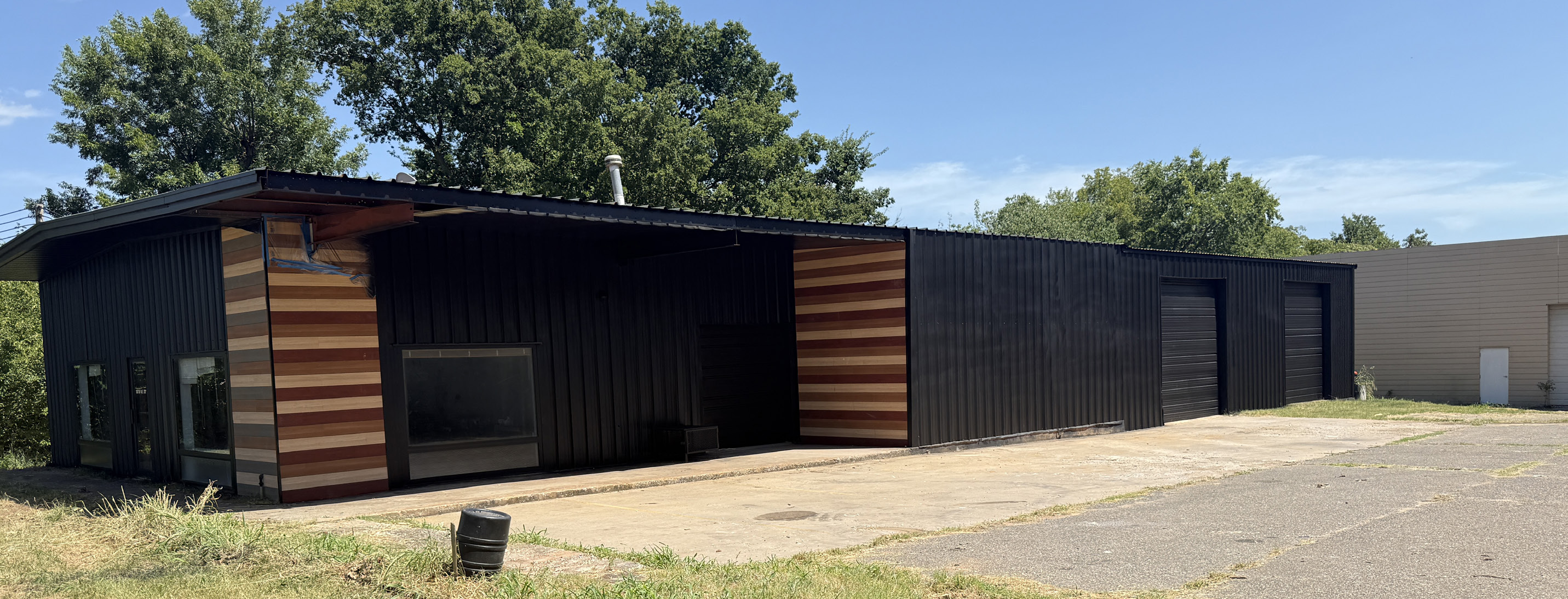
That peak is the number that matters for real estate, because every one of those licenses corresponded to a licensed premises. Some were shared buildings and some were multi-license campuses, but the great majority were a separate address: a metal building on acreage, a converted warehouse bay, a repurposed poultry house, or new construction built specifically to grow.
Why the Grower Count Fell 81 Percent
The decline from 9,402 to 1,801 was not a single event. Four mechanisms ran in sequence and are still running.
The Moratorium on New Licenses
Oklahoma imposed a moratorium on new commercial marijuana business license applications in August 2022. It has since been extended, and under HB 3143 it now runs through August 1, 2028. The effect is structural: the active license count can only go down, because there is no inbound flow to offset attrition.
For a building owner, this is the single most important fact in the dataset. A vacant former grow facility cannot be re-tenanted by a newly licensed grower, because there are no newly licensed growers.
Renewal Attrition Did Most of the Work
Enforcement gets the headlines. Expiration did the damage. Of the 13,337 grower licenses no longer active, 9,844 simply expired, meaning the holder did not renew.
| Status | Licenses | Share of inactive |
|---|---|---|
| Expired | 9,844 | 74% |
| Cancelled | 3,191 | 24% |
| Surrendered | 202 | 2% |
| Suspended | 67 | under 1% |
| Revoked | 33 | under 1% |
Expired and cancelled licenses account for roughly 98 percent of the total. Suspensions and revocations, the two categories reflecting adverse regulatory action, account for 100 licenses combined. This was overwhelmingly an economic exit, not a regulatory one.
That distinction matters to a landlord. An operator enforced out of business tends to leave abruptly. An operator who lets a license expire has usually been failing for two or three quarters first, which shows up in the rent roll before it shows up in the license data.
Price Collapse and the 32-to-1 Oversupply
OMMA's 2023 market study estimated that licensed cultivation capacity in Oklahoma exceeded what in-state patient demand could absorb by a factor of roughly 32 to 1. Wholesale flower prices fell accordingly. Growers who had underwritten leases against 2020 and 2021 pricing could not service them at 2023 and 2024 pricing, and those leases were frequently signed at rents set by cannabis demand rather than by the building.
Enforcement Closed the Remainder
Inspection requirements and seed-to-sale tracking obligations raised the cost of staying licensed. For a marginal grower already underwater on price, compliance cost was often the deciding factor. The 3,191 cancellations largely reflect that pressure rather than a single enforcement sweep.
Where the Count Stands in August 2026
The decline has slowed in absolute terms but has not stopped. Active grower licenses fell from 2,175 in March 2026 to 1,801 in August 2026, a loss of roughly 75 licenses per month over that span.
We would not expect that rate to hold precisely, and the remaining operators are on average better capitalized than the ones who left. But the direction is not in question, and no policy currently on the books reverses it before August 2028.
Where the Buildings Are
Every lapsed license leaves a licensed premises behind. The counties with the highest counts of former-grow premises track the state's population centers and, in several cases, its cheap rural land.
| County | Former-grow premises |
|---|---|
| Oklahoma | 763 |
| Cleveland | 438 |
| Tulsa | 404 |
| Creek | 393 |
| Logan | 386 |
| Delaware | 337 |
| Pottawatomie | 333 |
| Grady | 310 |
| Le Flore | 306 |
| Lincoln | 297 |
These ten counties alone account for close to 4,000 former-grow premises. Not all are standalone buildings, and a meaningful share are structures that were marginal before cannabis and are marginal again. But a substantial subset are real industrial assets with real improvements: upgraded electrical service, commercial HVAC and dehumidification, water treatment, floor drains, sealed interiors, and security infrastructure.
The Real Estate Consequence
For the owner of one of those buildings, the license data resolves into three practical statements.
The tenant is not coming back, and neither is a replacement grower. The moratorium removes the possibility of a newly licensed replacement tenant through at least August 2028, and the pool of existing licensed growers who might relocate shrinks by roughly 75 every month. Re-tenanting to another cultivator is possible but should not be the plan.
The building has to be re-underwritten for its next use, not its last one. Rents set during the 2020 to 2021 licensing boom were paying for access to a licensed premises, not for industrial space. Any valuation still anchored to that rent is anchored to a market that no longer exists. The improvements retain real value, but they have to be priced against what the next user will actually pay for them.
Prepared owners are on the right side of this. There is a finite supply of buildings in Oklahoma with heavy power service, high-capacity HVAC, dedicated water, and a hardened envelope, sitting in rural and semi-rural submarkets at industrial land basis. Indoor agriculture, cold storage, animal boarding, commercial food production, and small-bay flex users all want some subset of those attributes. The owners who take stock of what they have before the building sits vacant for eighteen months are the ones who capture that.
If your own cultivation tenant has already lost its license, our companion guide walks through what to do next in order: Your Grow Tenant Just Lost Their License. Now What?
What We Watch Every Month
Trio tracks the OMMA licensing dataset monthly: active grower counts by county, the month-over-month attrition rate, former-grow premises by county and building type, and the sale and lease comparables actually trading for this class of building. The current view sits on our Oklahoma grow facility market report page.
If you own a former cultivation facility and want to know what it is worth today under a next-use analysis rather than a cannabis-rent analysis, start with the grow facility valuation page.
Scope and Disclaimer
Trio Commercial Real Estate represents property owners. We do not broker OMMA licenses, represent license applicants or license holders, or advise on regulatory compliance. Questions about license status, transfer, or reinstatement belong with a cannabis regulatory attorney. Questions about lease default, notice, and remedies belong with your own counsel. Nothing here is legal advice.
Sources: Oklahoma Medical Marijuana Authority (OMMA) licensing data, https://oklahoma.gov/omma, accessed August 3, 2026; OMMA 2023 market study on licensed cultivation capacity; Oklahoma HB 3143 (moratorium on new commercial licenses through August 1, 2028).