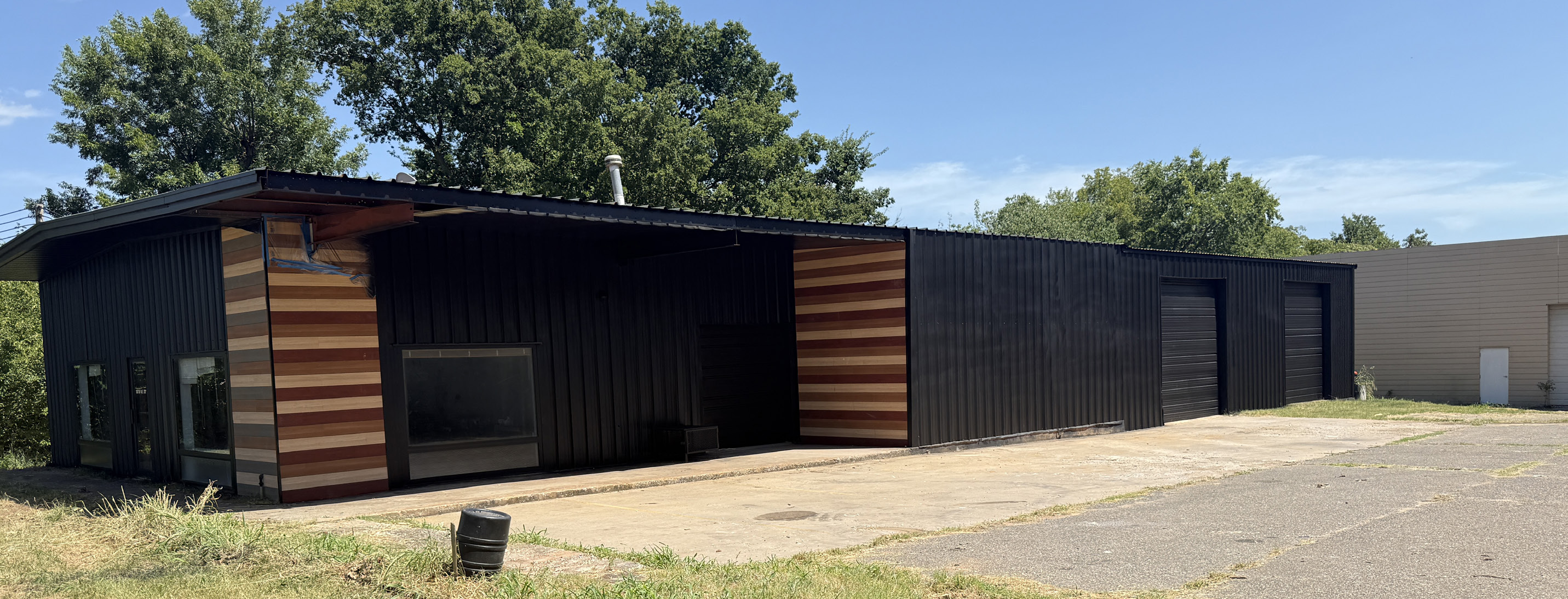
Your cultivation tenant's license lapsed, the rent stopped, and you are looking at a building you did not design and cannot easily describe to anyone else. Four things to get straight, in this order. First, the lease survived the license, but the rent almost certainly did not, and the default sequence is a conversation for your attorney rather than a decision to make at midnight. Second, you need a current value for the building with its improvements priced for their next use rather than for cannabis. Third, another grower is unlikely to be the answer: Oklahoma's licensed grower pool is shrinking by roughly 75 per month and no new licenses are being issued through August 1, 2028. Fourth, this class of building has real second lives, determined by which improvements the next user actually pays for.
Trio Commercial Real Estate is a brokerage in Edmond serving Oklahoma City and the state at large. We represent building owners, not license holders, and we take no position on your tenant's regulatory situation. What follows is the real estate side of the problem.
Key Facts:
- Active Oklahoma grower licenses fell from 9,402 at the December 2021 peak to 1,801 as of August 3, 2026.
- The count is still declining at roughly 75 licenses per month in 2026.
- No new grower licenses are being issued. A moratorium runs through August 1, 2028 under HB 3143.
- Of the 13,337 grower licenses no longer active, 9,844 expired and 3,191 were cancelled. Only 100 were suspended or revoked.
- Losing a license does not terminate a lease. It usually terminates the tenant's ability to pay it.
For the full statewide dataset behind these numbers, see Oklahoma Issued 15,103 Grow Licenses. 1,801 Survived.
Reality 1: The Lease Did Not Die With the License
A lapsed OMMA license is not a lease termination event unless your lease says it is. What actually happens is that the tenant loses the only revenue servicing the rent, and the practical result is a monetary default within one or two cycles.
The sequence from there belongs to your attorney, not to a broker and not to a blog post. What to bring to that conversation:
- The lease and any guaranty, including whether the guarantor is an individual or a shell entity.
- Any permitted-use or licensure covenant, which sometimes creates a non-monetary default independent of the missed rent.
- The security deposit amount and the last date rent was paid in full.
- Whether the improvements were landlord-funded, tenant-funded, or financed by a third party holding a lien or security interest in the equipment.
- Whether the tenant's personal property, product, or equipment is still inside, which can carry handling and disposal constraints a standard lockout does not contemplate.
That last item is where owners most often create problems for themselves. Talk to counsel before you change the locks or dispose of anything.
Decide early whether you want the building back or want the tenant to keep paying. Those are different strategies with different timelines. A cultivator with no license has no path back to revenue, which usually makes possession the more valuable outcome, but that judgment depends on the guaranty.
Reality 2: Get a Current Value, With the Improvements Priced for Their Next Use
Most former grow facilities carry a real improvement package. The mistake is valuing it at what it cost, or at what the cannabis tenant was paying for it. Neither number survives contact with the current market.
The improvements that hold value:
- Electrical service. The most valuable item. Upgraded three-phase service, a large panel, and distributed circuits are expensive and slow to install, and a next user who needs power inherits an upgrade often worth six figures.
- HVAC and dehumidification. High-capacity climate control with real dehumidification is unusual in a rural metal building. Its value depends on whether the next use needs tight environmental control.
- Water service and treatment. Dedicated water, filtration, and process plumbing transfer well to agricultural and food uses and are close to worthless to a dry-storage tenant.
- Security and hardened envelope. Camera infrastructure, access control, and a sealed, insulated shell cut buildout cost for several categories of next user.
- Floors and drainage. Sealed floors and floor drains matter a great deal to food, animal, and processing uses.
The improvements that usually do not hold value are the purpose-specific ones: grow room partitions, benching, light racks, and canopy-driven layouts. In many buildings the demolition cost of the interior grow build is a deduction from value, not an addition.
The right question is not what the building cost. It is what a specific next user will pay for it, and how much of the improvement package that user actually needs.
Reality 3: The Replacement Grower Pool Shrinks Every Month
Owners frequently start here, because it feels like the shortest path back to income. The data does not support it.
Oklahoma's active grower count stood at 1,801 in August 2026, down from 9,402 at the December 2021 peak. It fell from 2,175 in March 2026 to 1,801 in August, roughly 75 per month. No new grower licenses are being issued at all: the moratorium extended under HB 3143 runs through August 1, 2028.
The entire universe of potential cannabis replacement tenants is therefore existing licensed operators willing to relocate, and it contracts every month. The operators still standing are the better-capitalized ones, usually already in buildings they own or leases they are not looking to break.
A cannabis re-tenanting is not impossible. It should simply not be the plan you build around, and never the only channel a vacant grow facility is marketed through.
Reality 4: The Realistic Second Lives
The next use is determined by which of your improvements it consumes. Six categories account for most of the conversions we see in Oklahoma.
| Next use | What it reuses | Main constraint |
|---|---|---|
| Indoor agriculture (produce, microgreens, mushrooms, nursery stock) | Nearly the entire package: power, lighting circuits, HVAC, dehumidification, water and fertigation, room layout | Thin margins mean rent well below cannabis-era rates |
| Cold storage | Electrical service, insulated envelope, sealed floors and drains | Most grow buildings have grade-level loading only; dock height and refrigeration are new capital |
| Kennels, boarding, and veterinary | Sealed floors, floor drains, air exchange capacity, security, compartmented room layout | Zoning approval for animal boarding, plus sound attenuation |
| Commercial kitchens and food production | Three-phase power, water service, drains, washable surfaces, room-by-room build | Health department buildout, hoods, and make-up air |
| Flex industrial | Shell, site, power service | Interior demolition cost; value sits in the service and the land, not the finish |
| Small-bay multi-tenant warehouse | The compartmented interior is an asset, because demising walls already exist | Separate metering, individual entries, overhead doors |
The uses that pay the most for your improvements need environmental control, water, and drainage at the same time, which is why indoor agriculture and food production top the list. The uses that pay the least want only the shell, but those tenants are the deepest pool and the fastest to transact.
Location does most of the sorting. A building inside the Oklahoma City or Tulsa industrial fabric with three-phase service and paved access has a genuinely broad tenant set. A metal building on twenty rural acres with well water and septic has a narrow one, and for those the realistic answer is often a sale to an owner-user rather than a lease.
Build the Plan Before You Need It
The owners who come through this well knew their options before the tenant stopped paying. The ones who struggle spent the first six months of vacancy waiting for another grower to call.
If your cultivation tenant is current but you can see the trajectory, now is the time to do this work. A contingency plan for a grow facility is four things: a current valuation under a next-use analysis, a ranked list of realistic second uses for that building and submarket, a conversion cost estimate for each, and a view on lease versus sale. It takes weeks to assemble and it eliminates the worst version of this outcome, an eighteen-month vacancy spent discovering the answers one at a time.
If your tenant is already gone, the same work applies. It is just more urgent.
To start with what the building is worth today, see our grow facility valuation page. For the statewide picture on license attrition and former-grow inventory by county, see the Oklahoma grow facility market report.
Scope and Disclaimer
Trio Commercial Real Estate represents property owners. We do not broker OMMA licenses, represent license applicants or holders, or advise on regulatory compliance. License questions belong with a cannabis regulatory attorney. Lease default, notice, lockout, and remedies belong with your own counsel. Nothing here is legal advice.
Sources: Oklahoma Medical Marijuana Authority (OMMA) licensing data, https://oklahoma.gov/omma, accessed August 3, 2026; Oklahoma HB 3143 (moratorium on new commercial licenses through August 1, 2028).