Top Emergency Risks for Oklahoma Commercial Properties
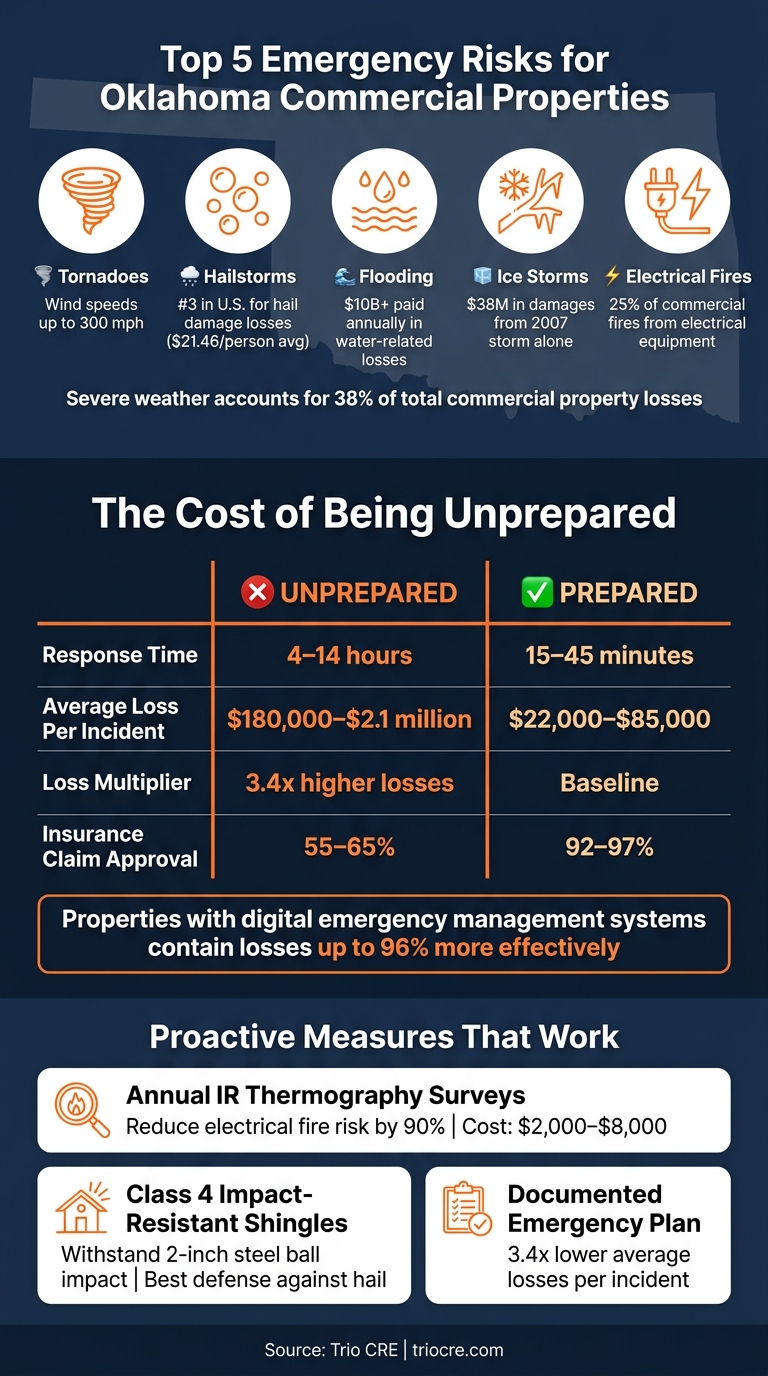
Oklahoma's commercial properties face constant threats from extreme weather and natural disasters. Tornadoes, hailstorms, flooding, ice storms, and electrical hazards collectively account for 38% of total commercial property losses. Without a proper emergency plan, property owners risk 3.4 times higher average losses per incident. Here's what you need to know:
- Tornadoes: High winds reaching up to 300 mph can cause severe damage to roofs, windows, and equipment. Secure rooftop units, install impact-resistant windows, and designate tornado shelters.
- Hailstorms: Oklahoma ranks third in hail damage losses. Regular roof inspections and using Class 4 impact-resistant shingles can reduce risks.
- Flooding: Flash floods and poor drainage lead to costly water damage. Flood insurance is essential, as standard policies don’t cover flood-related losses.
- Ice Storms: Frozen pipes, roof collapses, and power outages are common. Maintain heating, clear gutters, and prepare for snow removal.
- Fires and Electrical Hazards: Storm-related surges and faulty equipment cause 25% of commercial fires. Annual infrared thermography surveys can prevent 90% of electrical failures.
Preparedness is key. Properties with structured plans respond faster and incur lower losses, saving thousands of dollars. Regular risk assessments, insurance reviews, and proactive maintenance can help safeguard your property from Oklahoma's unpredictable weather.
Oklahoma Commercial Property Emergency Risks: Prepared vs. Unprepared
1. Tornadoes and High Winds
Oklahoma, located in Tornado Alley, faces a high risk of tornadoes. Across the United States, an average of 1,200 tornadoes strike each year, with Oklahoma consistently ranking as one of the hardest-hit states. While the peak tornado season spans March through June, severe wind events can happen at any time of the year.
"Tornadoes pose significant risks to businesses in their path, often developing rapidly with little to no warning." - RBN Insurance
The destruction caused by tornadoes is immense. Wind speeds from tornadoes can soar up to 300 mph, tearing apart roofs, shattering windows, and turning unsecured equipment into dangerous projectiles. For instance, unanchored items like HVAC units or satellite dishes can become airborne. Windows and doors are also highly vulnerable, often failing due to flying debris or sudden pressure changes, which can lead to shattered glass or compromised door frames. Once the exterior of a building is breached, wind-driven rain can flood the interior, causing even more damage. Wood-frame commercial buildings are particularly at risk, often costing more to insure compared to sturdier concrete structures.
Given these risks, proactive measures are essential.
A few key steps can make a big difference. Consider installing impact-resistant windows, reinforced doors, and properly securing all rooftop equipment. Additionally, trimming nearby trees and removing dead branches can help minimize wind hazards. It’s also crucial to designate a tornado shelter - ideally, a reinforced interior room on the lowest floor, away from windows, and clearly marked for employees and tenants. Lastly, securing comprehensive insurance, including coverage for business interruptions, can help offset potential financial losses.
For tailored advice on protecting your commercial property from severe weather, local experts at Trio CRE can provide practical strategies to enhance your preparedness.
2. Severe Hail Storms
Oklahoma City sits right in the middle of "Hail Alley", a region infamous for its frequent and intense hail storms. In 2022 alone, the National Weather Service recorded 214 hailstorms across Oklahoma. On average, Oklahoma City faces 5 to 8 major hail events each season, but in especially active years, that number can climb above 12. As Jacob Welker of Structera explains:
"OKC sits at the epicenter of Hail Alley – generating more large hail events annually than any other region."
The financial impact of these storms is immense. Oklahoma ranks third in the nation for hail damage losses per capita, averaging $21.46 per person. One particularly devastating storm in April 2024 dropped softball-sized hail, causing over $900 million in damages. Alarmingly, more than half of hail-related roof damage often goes unnoticed and unreported, especially on flat commercial roofs where cracks and punctures aren't immediately visible.
The type of roofing material used can make a big difference in how much damage a building sustains. Older roofing systems like TPO, EPDM, and modified bitumen are prone to punctures from hail, while built-up roofs with gravel provide better resistance. For those replacing roofs, opting for Class 4 impact-resistant shingles - designed to endure a 2-inch steel ball dropped from 20 feet - can be a smart investment.
Regular inspections and proper documentation are key to managing hail risks. Experts recommend scheduling a professional roof inspection before March each year, especially for buildings with older TPO membranes. After a major storm, having a professional assess the damage within 24 to 48 hours is critical for filing insurance claims. Be aware that replacing a roof in Oklahoma after hail damage can take up to 5 months due to high demand and supply chain delays. Advanced inspection techniques, like thermal imaging, can also help detect hidden moisture beneath roofing membranes.
For commercial property owners looking to reduce hail damage and other severe weather risks, working with specialists like Trio CRE can provide tailored, region-specific solutions. Taking proactive measures can make a significant difference in protecting your property from the challenges posed by Oklahoma's extreme weather.
3. Floods and Water Damage
Flooding is a major concern for commercial properties in Oklahoma, ranking as the most common natural disaster in the state. Both gradual river floods and sudden flash floods pose threats, but flash floods are particularly dangerous. The Oklahoma Department of Emergency Management explains:
"Flash floods usually result from intense storms dropping large amounts of rain within a brief period. Flash floods occur with little or no warning and can reach full peak in only a few minutes."
The financial impact of water damage is staggering. Insurers pay over $10 billion annually for water-related losses - a figure that surpasses payouts for fire and theft combined. Alarmingly, more than 20% of flood insurance claims come from properties located outside high-risk flood zones, underscoring the fact that no property is entirely immune. Oklahoma's clay-rich soil, which absorbs water slowly, combined with impervious surfaces like parking lots and rooftops, exacerbates flooding by overwhelming storm drains during heavy rainfall.
Floodwaters can wreak havoc on buildings, saturating materials and creating the perfect conditions for mold, which can begin to form within 24 to 48 hours. Oklahoma’s warm and humid climate accelerates this process, making immediate action crucial. Engaging professional restoration services within hours of a flood can help minimize structural damage and prevent long-term issues.
A significant challenge for commercial property owners is insurance coverage. Standard commercial property policies typically exclude flood damage. To protect against this risk, it’s essential to secure a separate NFIP (National Flood Insurance Program) policy. These policies cover up to $500,000 for building and contents but require a 30-day waiting period before they take effect. Keep in mind, however, that NFIP policies do not cover business interruption losses.
To reduce flood risk, take proactive steps like checking your flood zone using FEMA maps, installing smart leak detectors with automatic shut-off valves, and ensuring gutters and drains are clear. For properties with large paved areas, consider implementing green infrastructure solutions like bioswales or permeable pavement to better manage stormwater runoff.
4. Winter Weather and Ice Storms
Oklahoma might be famous for its tornadoes and scorching summers, but its winters can be just as unforgiving. The January 2007 ice storm is a chilling example of this. With ice layers reaching up to 4 inches thick, the storm prompted Governor Brad Henry to declare a state of emergency across all 77 counties. The aftermath was devastating: 26 lives lost, over 120,000 left without power for more than a week, and damages tallying around $38 million.
For commercial property owners, the risks during such storms are both immediate and expensive. Frozen pipes are a common issue, especially along north-facing walls and in attics where cold winds bite the hardest. Roofs, too, face significant threats. Snowdrifts tend to pile up in areas like roof valleys, intersections of different roof heights, and around mounted equipment, creating dangerous weight that can lead to structural failures. Additionally, freezing conditions can wreak havoc on fire protection systems, rupturing sprinkler pipes and disabling dry-pipe valves. This leaves buildings dangerously exposed in the event of a fire.
"Severe ice and snow storms are a significant factor in insured catastrophic losses." - Oklahoma Office of Management and Enterprise Services
Operational challenges during ice storms can escalate quickly. Power outages not only shut down heating systems - exacerbating the risk of frozen pipes - but also leave parking lots and walkways coated in ice, increasing the likelihood of slip-and-fall incidents. On top of that, road closures can lead to temporary business shutdowns, halting revenue for days.
To minimize these risks, take proactive steps before winter sets in. Keep your building heated to at least 65°F, even in areas that aren’t in use, and let faucets drip slightly during extreme cold to keep water flowing. Clear gutters and downspouts, trim back any overhanging tree branches, and inspect roof-mounted equipment for vulnerabilities. Arrange for snow removal services ahead of time, and designate specific areas for snow piles - making sure they won’t block fire hydrants or emergency exits.
Lastly, review your commercial property insurance policy carefully. Confirm that it covers utility outages and check whether your deductible applies per building or per event. This distinction can have a major impact on your expenses after a storm. Trio CRE can guide you through these preparations and help mitigate additional risks, such as fire and electrical hazards, which will be discussed in the next section.
5. Fires and Storm-Related Electrical Hazards
Fires and electrical hazards pose a constant threat to commercial properties in Oklahoma. Electrical distribution equipment alone is responsible for 25% of all commercial building fires, making it the leading cause. When severe storms hit, these risks grow even more. Lightning strikes, power surges during restoration, and structural damage from storms can all lead to electrical failures that might spark fires.
The financial impact of these emergencies is no small matter. Resolving a single electrical issue can cost anywhere from $15,000 to $150,000. Even more alarming, an arc flash - a sudden, explosive electrical discharge that can reach temperatures of up to 35,000°F - can result in total costs averaging $2.8 million. This figure includes medical bills, legal liabilities, and property damage. Beyond these immediate costs, property owners may face tenant displacement, business interruptions, and increased insurance premiums. Clearly, addressing fire and electrical risks proactively is essential.
Here’s a key takeaway: 80–90% of electrical failures show warning signs weeks before they become catastrophic. Annual infrared (IR) thermography surveys, which detect "hot spots" in electrical panels, can reduce the risk of electrical fires by over 90%. These surveys typically cost between $2,000 and $8,000, depending on the size of the building. It’s a small price to pay compared to the potential costs of repairs or damages. Additionally, protecting building systems from storm-related surges and structural damage is critical.
Storm preparation also requires mechanical readiness. Oklahoma's high winds - anything over 75 mph (the EF0 threshold) - can dislodge rooftop HVAC units and damage refrigerant lines. Severe windstorms may also cause structural damage, leaving internal electrical systems vulnerable to the elements. Once power is restored after an outage, surges can harm compressors and control boards. Installing whole-system surge protectors at the disconnect panel and shutting down HVAC systems during tornado warnings are two effective ways to minimize these risks.
Here are some practical steps to incorporate into your safety routine:
- Test molded-case circuit breakers every three years - 15–25% of these fail after 10 years of use.
- Maintain a clear workspace (30" × 36" × 78") in front of electrical panels - this is both a safety necessity and a code requirement.
- Avoid using extension cords as permanent wiring - they are a major fire hazard in commercial settings.
- Have a professional inspect gas lines before restarting any gas-fired equipment after storm damage.
If you’re looking to evaluate your property’s vulnerabilities, Trio CRE's asset management services can connect you with the right experts before the next storm season arrives.
Conclusion
The risks outlined above highlight the pressing need for strong emergency planning. In Oklahoma, commercial properties face threats like tornadoes, hail, flooding, ice storms, and electrical fires - all of which lead to substantial financial losses. Properties lacking a documented emergency plan experience 3.4 times higher average losses per incident, and severe weather alone accounts for 38% of total commercial property losses.
The difference between prepared and unprepared properties is staggering. Unprepared properties often take 4–14 hours to respond, with average losses ranging from $180,000 to $2.1 million per incident. In contrast, properties with digital emergency management systems can mobilize in just 15–45 minutes, containing losses to $22,000–$85,000. Clearly, preparation pays off.
To minimize losses, focus on two key actions: review your emergency plan quarterly and notify your insurer within 7 days of any incident exceeding your deductible. Additionally, alert CAP within 10 days to access state restoration resources. Properties with thorough documentation enjoy insurance claim approval rates of 92–97%, compared to just 55–65% for those relying on manual records.
As Holly Ring, Director of Commercial Real Estate, puts it:
"A commitment to emergency preparedness is also a commitment to protecting your property's long-term value."
For commercial property owners in Oklahoma, Trio CRE's asset management services offer tools to safeguard and enhance property value. From regular risk assessments to connecting with trusted vendors, Trio CRE helps you stay ahead - well before the next storm season arrives.
FAQs
What should my emergency plan include for a commercial building in Oklahoma?
When it comes to emergency preparedness for a commercial building in Oklahoma, it's crucial to address risks specific to the area - like tornadoes, floods, and fires. A well-thought-out plan not only safeguards lives but also minimizes property damage and downtime.
Essential Components of the Plan
- Evacuation Procedures: Clearly outline steps for safe and orderly evacuations. Include maps showing exits, assembly points, and any accessible routes for individuals with disabilities.
- Communication Protocols: Establish a reliable system for notifying tenants and staff during emergencies. This could include text alerts, intercom announcements, or email notifications.
- Emergency Contacts: Maintain an updated list of key contacts, including local emergency services, building management, and essential vendors.
Preparing for Severe Weather
- Identify Safe Shelter Areas: Designate specific areas within the building that offer protection during tornadoes or other severe weather events. These should ideally be interior rooms without windows, such as basements or reinforced hallways.
- Secure the Property: Have measures in place to protect the building, like storm shutters or securing outdoor equipment that could become hazardous in high winds.
- Vendor Relationships: Build partnerships with vendors for quick access to supplies and services, such as restoration companies or contractors for repairs.
Training and Drills
Regular training sessions and emergency drills are non-negotiable. These activities ensure that tenants and staff know exactly what to do when faced with an emergency. Practice not only builds confidence but also helps identify any gaps in the plan that need addressing.
By covering these bases, you can create a robust emergency plan that prioritizes safety and keeps disruptions to a minimum when the unexpected happens.
Which insurance policies do I need for tornado, hail, and flood damage?
To safeguard your property from tornadoes, hail, and floods, it's wise to invest in a comprehensive property insurance policy. Be sure to check if it includes specific endorsements or separate coverage for floods. Keep in mind that standard property insurance typically does not cover flood-related damage, so it's crucial to ensure your policy accounts for this potential risk.
What are the fastest upgrades to reduce storm and electrical-fire losses?
To cut down on storm and electrical-fire losses, think about using green infrastructure and improving stormwater management to control flooding and limit water damage. Staying on top of regular building maintenance is equally important, especially to address winter hazards like ice and snow. Taking these steps can safeguard your property and lower potential liabilities.