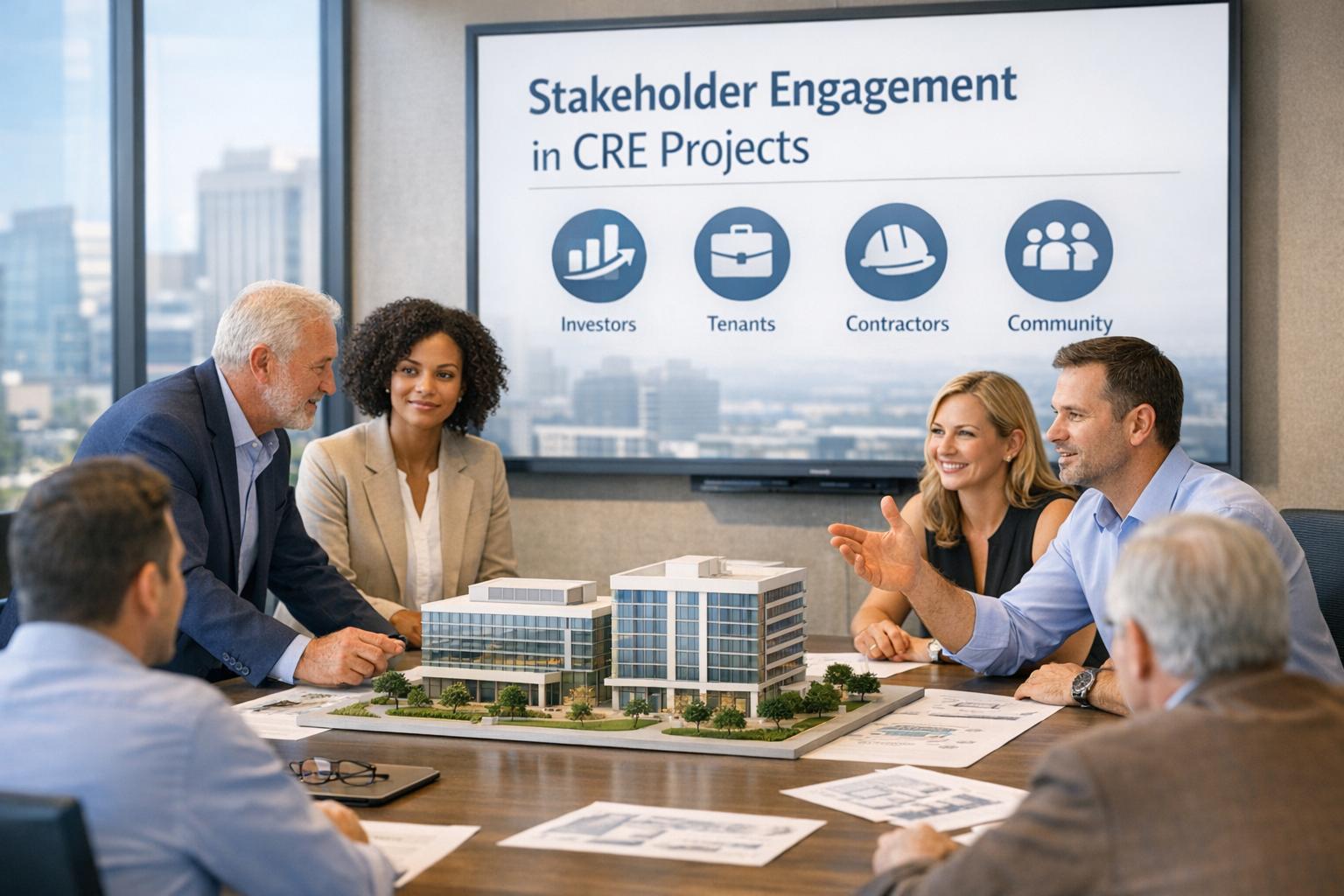
Stakeholder Engagement in CRE Projects
56% of risks in commercial real estate (CRE) projects stem from poor communication with stakeholders. This leads to 75% of projects exceeding budgets by an average of 15%, and 77% missing deadlines by about 70 days. The solution? Early and structured stakeholder engagement.
Key stakeholders in CRE include:
- Investors and property owners: Focused on returns and long-term growth.
- Tenants and end-users: Provide insights into space functionality and satisfaction.
- Government and regulatory bodies: Enforce zoning, permits, and compliance.
To improve outcomes:
- Map stakeholders using tools like the Power-Interest Grid.
- Customize communication based on stakeholder roles and preferences.
- Leverage technology like cloud platforms and AI for real-time updates and feedback.
A 5-step process ensures success:
- Define measurable engagement goals.
- Conduct stakeholder analysis to prioritize roles.
- Create tailored communication plans.
- Execute activities like town halls and regular updates.
- Monitor and evaluate feedback to refine strategies.
When done right, stakeholder engagement fosters trust, reduces risks, and improves project efficiency. For more insights, visit Trio CRE.
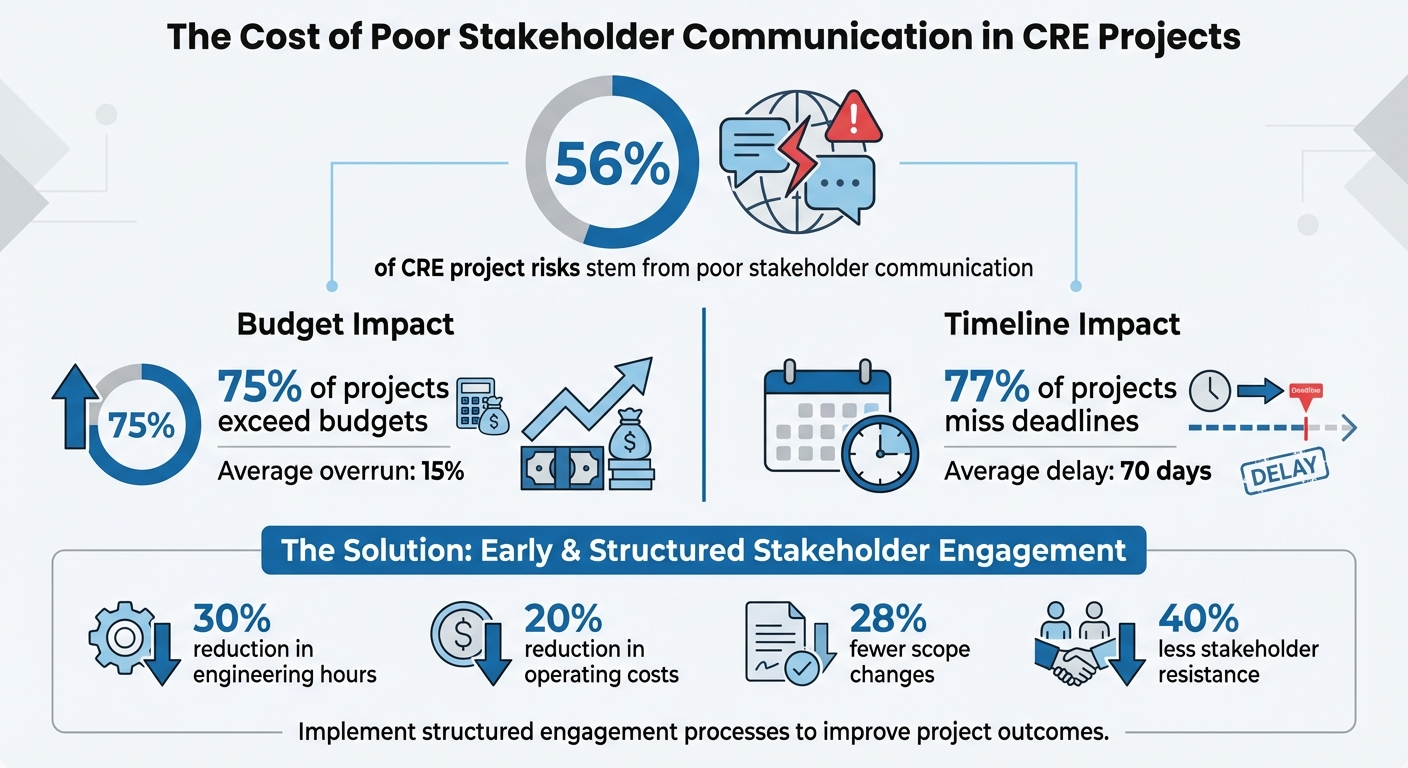
Impact of Poor Stakeholder Communication on CRE Projects
Stakeholder Engagement: Building Strong Relationships for Project Success
Main Stakeholder Groups in CRE Projects
Commercial real estate projects bring together a variety of players, each with distinct priorities that shape decision-making. Understanding these roles helps prevent miscommunication and keeps everything running smoothly. Key groups include developers, property owners, and financial partners, while others, such as subcontractors, engineers, and even the local community, often join as the project evolves. Let’s take a closer look at the main stakeholders, starting with property owners and investors.
Property Owners and Investors
Property owners and investors are the financial backbone of any project. They kick things off by defining feasibility, setting timelines, and making crucial decisions along the way. Their main goal? Maximizing returns and ensuring long-term growth of their assets. For example, at Trio CRE, the focus is on helping property owners fine-tune tenant mixes and implement strategies that boost property performance over time, ensuring investments yield consistent value.
Tenants and End-Users
Tenants and end-users play a pivotal role by sharing insights on how spaces function, lease terms, and overall satisfaction. Engaging with them early ensures the final product aligns with market needs and avoids creating spaces that miss the mark.
Government and Regulatory Bodies
Local governments and regulatory agencies hold significant sway over projects, thanks to zoning laws, permits, and compliance rules. While they may not focus on profits, their influence on timelines is undeniable. Early communication with these entities is crucial to understanding requirements and avoiding delays that could derail construction progress.
Stakeholder Engagement Strategies That Work
Once everyone knows their roles, the next step is creating strategies that bring stakeholders together and align them with the project’s goals. Good stakeholder engagement doesn’t just keep things running smoothly - it builds relationships that help projects succeed. On the flip side, poor communication can lead to delays and increased risks. Luckily, there are practical ways to avoid these pitfalls.
Mapping Stakeholder Influence and Interests
After identifying key stakeholder groups, tailor your strategies to fit their level of influence and interest. A great tool for this is the Power-Interest Grid. This matrix helps you prioritize stakeholders based on two factors: their power (or influence) and their interest in the project. Here’s how it works:
- High Power, High Interest: Stakeholders like property owners and general contractors fall into this group. They need to be actively involved in decision-making.
- High Power, Low Interest: Financial partners, for example, may not want daily updates but should still be kept satisfied with regular check-ins.
- Low Power, High Interest: Community members often fit here. Keep them informed and invite their input during feedback sessions.
- Low Power, Low Interest: These stakeholders require minimal attention - occasional updates are usually enough.
Keep in mind that stakeholder roles can shift over time, so revisit your grid throughout the project. For larger developments, combining stakeholder management tools with GIS mapping can help visualize concerns geographically, making it easier to address issues specific to certain areas.
Customizing Communication Methods
There’s no universal approach to communication, especially in commercial real estate. Marin Jurčić from Productive sums it up well: "Stakeholder engagement is about relationships. Stakeholder management is about control. When you manage stakeholders without engaging them, you often get friction."
Tailor your communication style for different audiences:
- Internal project managers might benefit from informal weekly updates via Slack or email.
- Executive sponsors and investors usually prefer polished, formal presentations delivered monthly or at key milestones.
- Regulatory agencies need detailed, compliant reports on a quarterly basis.
- Community groups value transparency, so town halls during major project phases work well.
It’s also important to create feedback loops. Use workshops, surveys, or one-on-one meetings to uncover concerns that might not surface in larger discussions. Companies that prioritize structured stakeholder management have reported 28% fewer scope changes and 40% less resistance from stakeholders.
These tailored communication methods set the stage for integrating technology to streamline engagement even further.
Using Technology for Engagement
Technology can take stakeholder engagement to the next level by offering centralized, real-time access to project data. For example, cloud-based platforms let project teams monitor job site activities instantly, while real estate intelligence tools consolidate updates and feedback into one dashboard.
Here’s the impact technology can have:
- Connecting vendors via digital platforms can cut engineering hours by 30% and reduce operating costs by 20%.
- Tools like ProjectManager allow stakeholders to access project updates in read-only mode, avoiding version control issues.
- AI-driven systems can predict stakeholder reactions, analyze communication sentiment, and automate status reports tailored to specific audiences.
- Visual mapping tools, such as Creately or Mind Map Maker, make it easy to update and share stakeholder influence grids.
- Blockchain technology ensures transparent, tamper-proof project records, reducing disputes through secure documentation.
The key is to match the right tools to your stakeholders’ needs. Use Slack for quick internal updates, offer executive dashboards for sponsors, and automate surveys to gather feedback at critical milestones. Also, establish clear escalation paths - like flagging decisions that remain unresolved for more than five business days.
In Oklahoma, Trio CRE uses these advanced methods to ensure their commercial real estate projects stay on track. Want to learn more? Visit Trio CRE.
5-Step Stakeholder Engagement Process
Now that you’re familiar with the strategies, let’s dive into a practical framework to put them into action. This framework is designed to systematically engage stakeholders, directly addressing the risks of budget overruns and schedule delays mentioned earlier. By following these five steps, you can tackle the 56% of project risks tied to poor communication, ensuring your commercial real estate project stays on course. These steps create a continuous cycle that strengthens communication throughout the project lifecycle.
Step 1: Define Engagement Goals
Start by setting clear and measurable engagement objectives. Are you trying to curb the 15% budget overruns typical in commercial real estate projects? Or is your focus on building trust with local communities? Perhaps aligning investor expectations with project timelines is your priority. Whatever the case, your goals need to be specific and measurable - for example, achieving a set satisfaction score for issue resolution or meeting response time benchmarks for stakeholder inquiries.
It’s also important to separate non-negotiable elements from those open to discussion. For instance, zoning laws may dictate building height, leaving no room for flexibility, but landscaping or lighting choices might allow for stakeholder input. This clarity prevents wasted time on discussions that won’t influence the outcome. Additionally, determine the level of engagement needed for each stakeholder. Some may only require periodic updates, while others should actively participate in planning meetings or even have decision-making authority.
"Stakeholder engagement is about active collaboration, and not just updates or approvals." - Marin Jurčić, Productive.io
Step 2: Conduct Stakeholder Analysis
The next step is identifying all project stakeholders. Use brainstorming sessions, document reviews, and interviews to compile a comprehensive list. Then, prioritize stakeholders based on their influence and interest in the project.
For commercial real estate, your analysis should include developers, property owners, tenants, financial partners, general contractors, architects, regulatory agencies, and community members. Keep track of each stakeholder’s role, interests, and preferred communication methods in a centralized register. Remember, influence and interest levels can shift as the project moves through different phases like design, permitting, and construction. Regular updates to your analysis are crucial during these transitions.
Step 3: Create a Communication Plan
Once you’ve identified and prioritized stakeholders, develop a customized communication plan for each group. This plan should outline who will receive updates, what information they’ll get, when they’ll get it, and how it will be delivered. For example, investors might require formal quarterly reports, while contractors may benefit from weekly email updates.
Set clear response time standards for different platforms - for instance, responding to live chat inquiries within 48 seconds or addressing social media messages within an hour. Document these expectations so your team knows exactly what’s required.
Step 4: Execute Engagement Activities
Now it’s time to put the plan into action. Tailor engagement activities to suit each stakeholder group. For example, host town hall meetings for community members during key project phases, arrange one-on-one discussions with high-influence stakeholders to address their concerns, and send progress updates to investors at agreed-upon milestones.
Consider using collaborative models that encourage early stakeholder involvement. Approaches like Construction Manager at Risk or Progressive Design-Build can help foster meaningful engagement from the start. Stick to a consistent schedule and always follow through on your communication commitments.
Step 5: Monitor and Evaluate Results
Finally, assess whether your engagement efforts are effective. Use tools like pulse surveys, sentiment analysis, and participation metrics to gauge success. Don’t just look at attendance numbers - focus on the quality of feedback and how it influences decision-making. This approach shows stakeholders that their input is valued and builds trust.
Close the loop by sharing updates with stakeholders about how their feedback has influenced the project. Keep a "lessons learned" log to document what worked and what didn’t, helping you refine your approach for future phases.
Benefits of Strong Stakeholder Engagement in CRE Projects
When it comes to commercial real estate (CRE) projects, engaging stakeholders effectively can save time, money, and a whole lot of headaches. A well-thought-out engagement strategy helps bridge communication gaps, which are often the root cause of costly delays and overruns. The result? Smoother collaboration, fewer risks, and better project outcomes.
Better Collaboration and Trust
At the heart of any successful partnership is transparency. Regular meetings, digital surveys, and other participation tools can help bring stakeholders together and build consensus. When key players like investors, contractors, and architects are involved early - especially during the pre-construction phase - they feel a sense of ownership that carries through the entire project. Plus, advanced tools ensure that everyone has access to accurate, up-to-date information throughout the project lifecycle. This level of openness reduces misunderstandings and fosters trust, which means fewer conflicts down the road.
Reduced Risks and Conflicts
By engaging stakeholders early, you can catch potential issues - whether they’re market-related, technical, or financial - before they spiral out of control. Planning together from the start allows for proactive problem-solving, addressing concerns head-on. This approach directly tackles the 56% of project risks that stem from poor communication. Tools like cloud-based dashboards and real-estate intelligence platforms provide a centralized, real-time source of information, helping to minimize disputes and keep everyone on the same page.
Better Project Efficiency and Success
Strong stakeholder engagement doesn’t just smooth things over - it delivers measurable efficiency gains. For example, connecting vendors through technology can cut engineering hours by up to 30% during design and procurement, while digital collaboration can slash operating costs by 20%. Collaborative models like Construction Manager at Risk or Progressive Design-Build bring stakeholders together early, ensuring smoother project execution. Aligning the interests of everyone involved - owners, investors, government agencies, and local communities - at the outset maximizes benefits for all parties and lays the groundwork for ongoing partnerships.
Conclusion
Getting stakeholders on the same page early on is key to keeping commercial real estate projects on track and within budget. Poor communication often leads to delays and cost overruns, but the industry is moving toward more collaborative approaches to address this issue.
Models like Construction Manager at Risk and Progressive Design-Build encourage teamwork and shared responsibility from the start. This kind of early collaboration lays a solid groundwork for smoother project execution and better outcomes.
Technology has also transformed how stakeholders stay connected. Tools like cloud-based dashboards and real estate intelligence platforms keep everyone informed with real-time updates, cutting through confusion and helping to minimize disputes.
"It takes trust, close collaboration, and digital connectivity to engage stakeholders and cultivate enthusiastic participation throughout a project's lifecycle. It's an art that every developer should master." - Kelsi Borland, Northspyre
FAQs
When should stakeholder engagement start in a CRE project?
Stakeholder engagement is crucial right from the planning phase of a commercial real estate project. Getting everyone involved early ensures open communication, encourages teamwork, and minimizes risks like budget overruns or delays. By actively involving stakeholders from the beginning, you create a solid groundwork for smoother execution and better long-term outcomes.
How do I decide which stakeholders need the most attention?
To figure out which stakeholders require the most attention, assess two key factors: their level of influence and how much the project impacts them. Those with substantial decision-making power and a strong effect on the project's outcomes should take priority. By focusing on these individuals or groups, you can improve strategic outcomes, address potential risks effectively, and uphold trust throughout the process. Engaging actively with these key stakeholders is crucial for ensuring the project's success.
What tools can keep stakeholders aligned without too many meetings?
To keep stakeholders on the same page without the need for constant meetings, rely on structured engagement processes and modern collaboration tools. Platforms that support task tracking, real-time updates, and clear communication can make teamwork more seamless. Additionally, automation and project management tools designed specifically for real estate development can simplify workflows, keeping everyone informed and aligned throughout the entire project lifecycle.