Property Development Cost Estimator
Property Development Cost Estimator
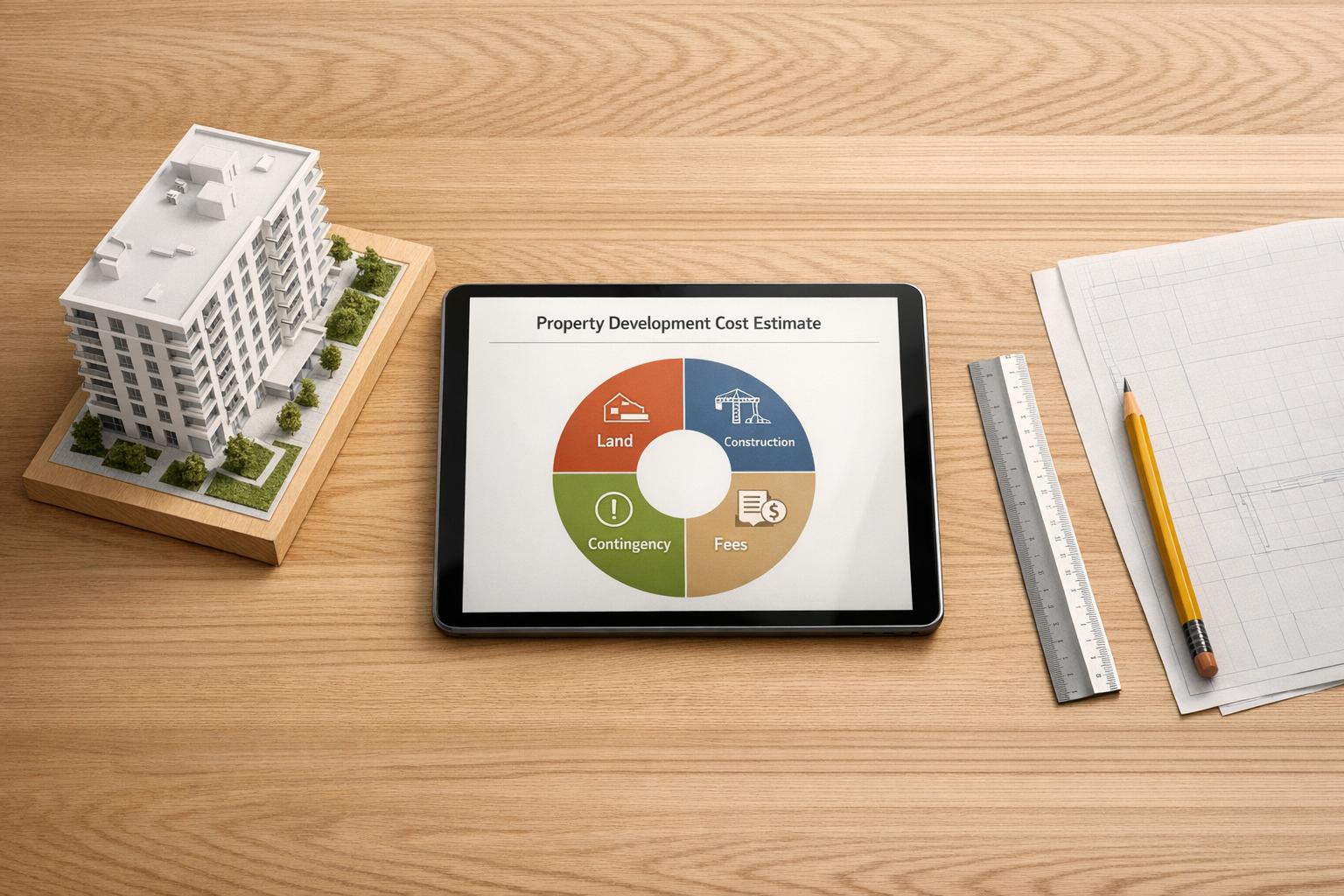
A Property Development Cost Estimator gives developers, investors, and first-time builders a practical way to sketch out a project budget before moving deeper into planning. Instead of guessing at the numbers, you can map out major expenses like land acquisition, construction, permitting, and design fees in one place. That kind of clarity is useful whether you're reviewing a small residential build or comparing multiple development opportunities.
Why a Clear Cost Breakdown Matters
Early budgeting shapes better decisions. When you can see how each cost category contributes to the overall total, it becomes easier to test scenarios, manage risk, and spot where the budget may be too thin. Adding a contingency amount also helps account for the real-world unpredictability that comes with building projects.
Simple Inputs, Useful Insights
This property development cost estimator is designed to stay focused on the essentials. You enter a few key figures, and the tool calculates construction costs, adds fixed fees, applies your contingency percentage, and returns a transparent total. It’s a simple way to create a reliable starting point for feasibility planning, with the understanding that final costs can vary by location, site conditions, and market trends.
FAQs
What costs are included in this estimator?
This estimator focuses on the core expenses most developers and property investors want to see first: land cost, construction cost based on square footage, permitting fees, design and architecture fees, and a contingency budget. It’s built for quick planning, so it doesn’t automatically include every possible line item such as financing, legal costs, utilities, marketing, or taxes. If you need a deeper feasibility model, you can use this as your starting point and layer in those extras afterward.
Why is contingency important in a development budget?
Contingency gives you breathing room. Even well-planned projects run into changes, whether that’s material price movement, site surprises, design revisions, or permit-related delays. A 10% contingency is a common starting point for early estimates because it helps you avoid building a budget that looks good on paper but falls apart in real life. Depending on your project’s complexity and market conditions, you may want to adjust that percentage higher or lower.
How accurate is the total estimated cost?
It’s best to treat the result as a planning estimate, not a final bid. The tool is designed to make the math transparent and easy to follow, which is exactly what you want in the early stages of a project. Actual costs can shift based on location, labor rates, material pricing, site conditions, project scope, and local approval requirements. For a final budget, you’d still want input from contractors, architects, and local professionals.