How to Cut Costs in Property Management
Managing property expenses is more challenging than ever, but reducing costs without compromising quality is achievable. Here’s how:
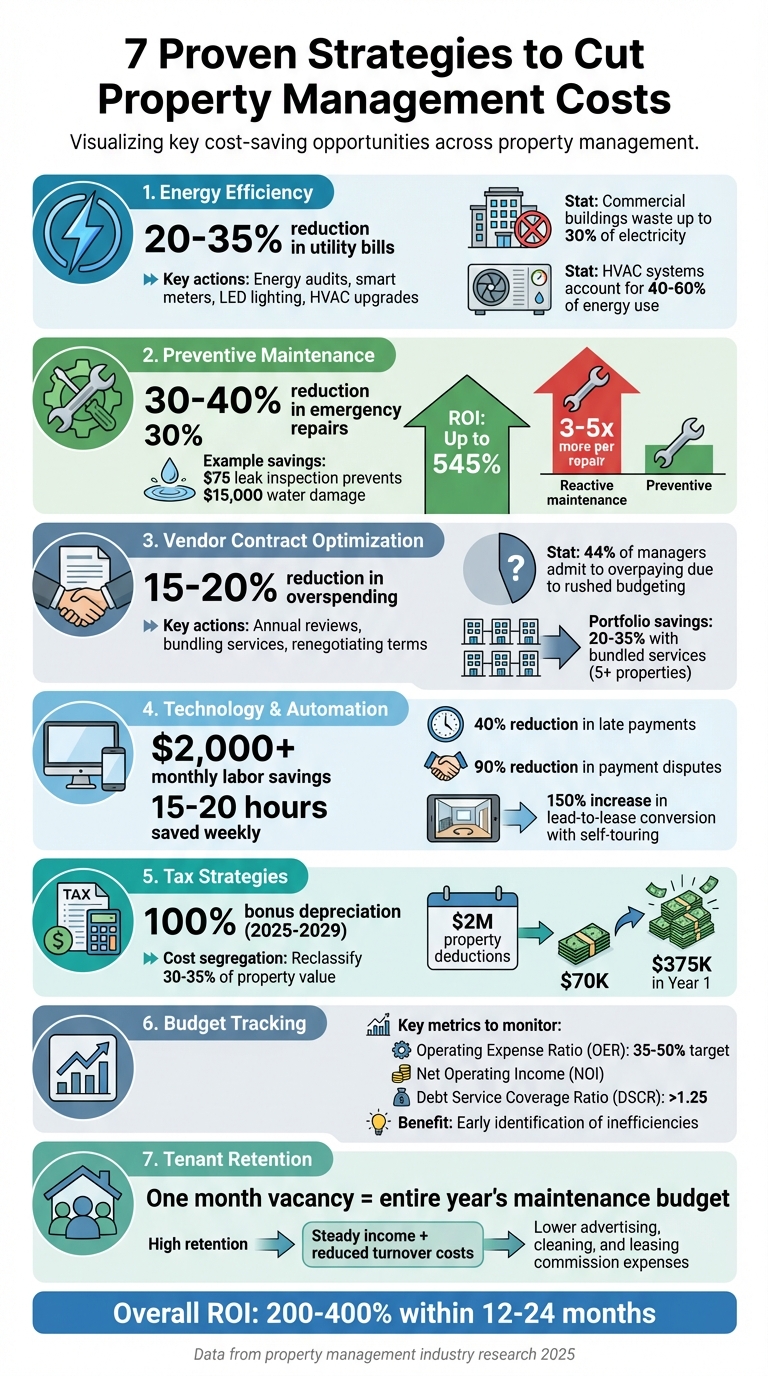
- Energy Costs: Conduct energy audits, install smart meters, upgrade to energy-efficient HVAC systems, switch to LED lighting, and use automation to align energy output with occupancy. These steps can cut utility bills by 20–35%.
- Preventive Maintenance: Regular inspections and scheduled maintenance reduce emergency repairs by 30–40%, saving thousands in unexpected costs.
- Vendor Contracts: Renegotiate agreements, bundle services, and evaluate vendor performance annually to cut overspending by 15–20%.
- Technology: Automate rent collection, maintenance requests, and communication. Digital tools save time and reduce labor costs by up to $2,000 monthly.
- Tax Strategies: Use cost segregation and bonus depreciation to accelerate deductions, saving significantly on taxes.
- Budget Tracking: Monitor key metrics like Net Operating Income (NOI) and Operating Expense Ratio (OER) to identify inefficiencies early.
- Tenant Retention: Focus on keeping tenants longer to avoid costly vacancies and turnover expenses.
Bottom line: Strategic cost management improves profitability while maintaining tenant satisfaction. Start small with energy savings or maintenance plans and build from there for lasting results.
7 Cost-Cutting Strategies for Property Management with ROI Data
How to Reduce Your 3 Biggest Commercial Real Estate Expenses
Reduce Energy Costs
Energy costs are one of the biggest controllable expenses in property management. Did you know that commercial buildings waste up to 30% of their electricity due to poorly maintained or outdated systems? This means there’s a real opportunity to cut costs without affecting tenant comfort.
Track Energy Use
The first step in reducing energy costs is keeping a close eye on energy consumption. Start with an energy audit to establish a baseline for each property’s usage. Use Energy Use Intensity (EUI) to identify unusual spikes in consumption before they lead to higher bills.
Smart meters and IoT sensors make this easier by offering real-time data on electricity, gas, and water usage. Digital meters can even track specific equipment, like HVAC systems, so you can pinpoint inefficiencies. For example, if your winter gas bill suddenly jumps by $300, it could mean there’s a leak or a vent blockage that needs immediate attention.
Properties that implement structured energy maintenance programs often see utility cost reductions of 20% to 35% within a year, even without replacing equipment. Regularly tracking EUI can reveal problems months earlier than waiting for issues to escalate.
Once you’ve gathered this data, the next step is upgrading equipment to lock in those savings.
Install Energy-Efficient Equipment
When energy inefficiencies are identified, upgrading to energy-efficient equipment becomes essential. HVAC systems are a great place to start since they account for 40% to 60% of energy use in commercial buildings. A well-maintained HVAC system can use 15% to 25% less energy compared to one that’s only fixed when it breaks down. If your system is more than 10 years old, replacing it could significantly lower energy costs.
Smart thermostats are another effective upgrade, delivering an average 8% savings on heating and cooling bills annually. These devices allow you to adjust temperatures remotely and set schedules based on actual occupancy. Even a small thermostat error - like 2°F off in a mid-size building - could cost $12,000–$28,000 per year in unnecessary expenses.
Lighting upgrades are another quick win. LEDs consume up to 75% less energy and last far longer than traditional bulbs, with lifespans of 20,000 to 50,000 hours. Switching to LED lighting in common areas can reduce electricity use by 10% to 20%. Adding occupancy sensors in places like bathrooms and storage rooms ensures lights are only on when needed.
Match Energy Output to Building Occupancy
After optimizing energy usage and upgrading equipment, the next step is to align energy output with actual building occupancy. Heating, cooling, and lighting empty spaces wastes money unnecessarily. Building Automation Systems (BAS) can help by setting temperature schedules that correspond to when tenants are present.
Faulty occupancy sensors in large office spaces can lead to $8,000–$15,000 in wasted energy annually. To avoid this, schedule annual calibration for sensors, dampers, and control systems. Regular checks prevent the 3–5% drift in BAS sensors that can lead to "silent" energy waste.
Kelly Dougherty, President of FirstService Energy, highlights the importance of understanding energy patterns:
"The goal is always to make the best decisions for each community. Every building is different, and when boards and councils understand where their energy dollars are going, they can make changes that meet the specific needs of their building."
Quarterly HVAC maintenance can also make a big difference. Properties that follow this schedule average 22% lower cooling costs than those that rely on reactive fixes. Cleaning coils and replacing filters every three months ensures systems run efficiently, as dirty components can increase energy use by 15% to 25%.
Use Preventive Maintenance
Preventive maintenance isn't just about energy efficiency - it’s a powerful tool for managing costs in property management. Did you know reactive maintenance wastes 35%–45% of total spending and costs three to five times more per repair? By switching to preventive maintenance, you can cut total costs by 30% and reduce emergency orders by 40% in just six months. Plus, it helps major systems like HVAC, water heaters, and roofing last longer - preventing them from degrading 30% to 50% faster due to neglect.
Inspect Properties Regularly
Regular property inspections are the backbone of any preventive maintenance strategy. They help you catch minor problems - like leaks, wear and tear, or safety hazards - before they turn into costly emergencies. For example, a simple $75 leak inspection can save you up to $15,000 in water damage.
Aim to inspect your properties at least twice a year, ideally in the spring and fall, to evaluate weather-sensitive systems like HVAC and roofing. During these inspections, focus on high-risk areas such as plumbing, electrical components (like GFCI outlets and smoke detectors), and the building’s exterior, including gutters and downspouts. As Missoula Property Management highlights:
"The upfront cost of scheduling regular inspections is often minimal compared to the financial risk of deferred maintenance".
Documenting inspections with photos and detailed notes creates a clear record of a property’s condition. This not only supports future upgrades but also helps resolve disputes with tenants. Once inspections reveal areas for improvement, the next step is upgrading fixtures.
Install Cost-Saving Fixtures
Upgrading fixtures based on inspection results can significantly lower ongoing expenses. For instance, leak detection sensors installed under sinks or around toilets can prevent costly water damage. Low-flow plumbing fixtures reduce water usage without sacrificing tenant comfort, while LED lighting upgrades cut energy costs by 10% to 15% and minimize labor costs due to their longer lifespan compared to traditional bulbs.
Smart thermostats are another smart investment. They adjust heating and cooling based on occupancy, improving efficiency. Combine this with better insulation and energy-efficient windows, and you'll reduce the strain on HVAC systems while improving temperature control. Over time, these upgrades pay for themselves through lower utility bills and fewer emergency repairs.
Maintain Equipment on Schedule
A well-planned maintenance schedule - targeting a 70% proactive to 30% reactive ratio - can dramatically reduce repair costs and extend the life of your systems. This approach can yield a return on investment as high as 545%. Start by focusing on high-priority assets like HVAC systems, plumbing, and roofing, which are most prone to costly emergency repairs.
Here’s a quick breakdown of preventive actions and their potential savings:
| Asset Type | Preventive Action | Emergency Repair Savings |
|---|---|---|
| HVAC System | $150 Filter/Coil Clean | $1,200–$3,500 compressor replacement |
| Plumbing | $75 Leak Inspection | $15,000 water damage remediation |
| Roof/Gutters | Seasonal Cleaning | Prevents foundation or interior damage |
| Appliances | Cleaning dryer vents | Reduces fire risk and costly replacements |
Using tools like Computerized Maintenance Management Systems (CMMS) can make scheduling easier by automating work orders based on specific intervals, runtime hours, or condition triggers. Additionally, training your on-site staff with basic diagnostic checklists can empower them to handle common issues - like running toilets or tripped breakers - on their own. This can resolve 15% to 25% of problems without involving a vendor, cutting down on the high premiums of after-hours emergency calls, which are often 40% to 80% more expensive.
As Alice Walker from Oxmaint wisely notes:
"Every dollar your properties spend on emergency repairs is a dollar that could have been prevented".
Negotiate Better Vendor Contracts
Vendor contracts can be a goldmine for cutting costs while keeping service quality intact. Regularly sharing performance reports with managers and conducting audits can trim overspending by around 15%. Think of vendor relationships as partnerships that need ongoing attention and adjustments.
Review and Renegotiate Contracts
Beyond routine cost-saving measures, reworking vendor contracts can significantly lower operational costs. Start by centralizing all vendor agreements in a digital system to monitor spending and track contract expiration dates. Automated alerts for upcoming expirations give you time to explore competitive bids, avoiding costly auto-renewals.
Leverage data from maintenance software and resident feedback to negotiate better pricing or improved service terms. Decide in advance what’s most important - whether it’s price reductions, expanded services, or additional guarantees. Keep in mind, 44% of public procurement managers admit to overpaying due to rushed end-of-year budgeting. Giving yourself enough time to negotiate is essential.
Once you reach verbal agreements, document them immediately. Updating contracts digitally ensures everyone is on the same page and saves time. For example, negotiating parts markup caps to cost plus 10–15% - instead of the usual 30–50% - can save $15,000 to $40,000 annually by cutting hidden inflation.
Combine Insurance and Services
Consolidating vendors can simplify management and boost your bargaining power. By bundling services like landscaping, pest control, and maintenance, you can secure volume discounts. Portfolios with five or more properties often achieve 20–35% savings compared to handling separate contracts.
Pooling your buying power also allows for master service agreements with consistent pricing and faster response times, often 15–30% cheaper. This approach reduces administrative headaches too - manual tracking and juggling multiple invoices can eat up 12% of your maintenance budget.
To streamline further, integrate vendor insurance compliance tracking into your management system. This eliminates the need for costly standalone compliance tools and reduces time spent manually verifying Certificates of Insurance. Fewer vendors mean fewer certificates to track, lower legal risks, and less paperwork overall.
Evaluate Vendor Performance Each Year
Annual vendor evaluations are key to maintaining competitive pricing and dependable service. Regular assessments can cut operating costs by 15–20%. Focus on key performance metrics like response times, first-time fix rates, and resident satisfaction.
As Logan Anderson, Director of Strategy & Growth at Re-Leased, explains:
"What gets measured gets improved".
Here’s a quick guide to annual reviews:
| KPI Category | Specific Metric | Target/Benchmark |
|---|---|---|
| Responsiveness | Acceptance Speed | 0.5–1.2 Hours |
| Reliability | Planned Maintenance % | ≥85% |
| Quality | First-Time Accuracy | ≥95% |
| Satisfaction | Resident Rating | 4.2–4.6 / 5.0 |
| Efficiency | Speed of Repair | 3.4–6.8 Days |
Data from 2025 highlights the value of rotating vendors. Properties sticking with the same three vendors averaged repair speeds of 8.2 days, while those rotating based on performance achieved 5.1 days. Allocating 10% of your workload to new vendors keeps your primary partners accountable and helps you explore better options.
During these evaluations, dig into transaction histories to spot incomplete fixes, survey tenants and board members about vendor performance, and revisit exit clauses in contracts. Use these findings to renegotiate terms or replace vendors who don’t meet your standards. Aligning vendor performance with your cost-saving goals ensures long-term property value and happier tenants.
Use Technology to Cut Costs
Digital tools are reshaping how property managers handle their daily tasks, slashing both labor and overhead expenses. By automating routine work, property managers report saving 15–20 hours a week on administrative duties, which translates to over $2,000 in monthly labor savings. This shift eliminates repetitive tasks that often drain time and resources.
Automate Tasks with Property Management Software
Automation takes cost-saving strategies to the next level by streamlining everyday operations. Property management software can manage routine tasks that would otherwise eat into valuable time. For instance, automated rent collection not only reduces late payments by up to 40% but also cuts payment disputes by 90%. With 61% of renters expected to pay online by 2025, digital rent collection is quickly becoming the norm. Platforms like DoorLoop, starting at $69 per month for up to 20 units, automate essential tasks such as posting late fees, reconciling bank transactions, and generating financial reports without requiring manual input.
Maintenance automation is another game-changer. Response times can drop from hours to just minutes. For example, smart sensors like those from Wint.ai can detect water leaks in seconds, helping prevent expensive emergency repairs and insurance claims. AI-powered virtual receptionists, such as Upfirst, handle after-hours calls for as little as $24.95 per month. By early 2026, 44% of property management professionals are expected to incorporate AI into their daily operations.
"Automation isn't just about 'saving time' - it's about measurable business outcomes".
David Bitton, Co-founder of DoorLoop, emphasizes the value of starting with high-volume tasks like rent collection and gradually expanding to maintenance requests and tenant communications. This approach can automate up to 70% of communication efforts, from confirming balances to scheduling maintenance.
Switch to Virtual Office Operations
Physical office spaces often come with hefty costs for rent, utilities, and equipment. With cloud-based property management systems, teams can operate remotely while still delivering excellent service. Self-touring technology, such as Rently, priced at about $15 per listing per month, eliminates the need for on-site staff to show units. These automated solutions can increase lead-to-lease conversion rates by 150% while reducing overhead expenses.
Digital tools also enhance operational transparency. They create audit trails for payments, maintenance requests, and lease documents, which lowers legal risks without burdening administrative staff. Additionally, trigger-based communications automatically send rent reminders and maintenance updates, keeping tenants informed without requiring additional staff.
Use Data to Guide Spending Decisions
Data analytics provide a powerful way to identify inefficiencies and optimize spending. By tracking maintenance costs per unit, property managers can pinpoint aging assets or underperforming vendors. Historical data also helps forecast equipment failures, allowing for planned replacements that are 20–40% cheaper than emergency repairs.
"What appears to be a staffing issue often turns out to be an operational design issue".
As Domos highlights, reactive "break-fix" maintenance can cost 3–5 times more than preventive measures, and properties relying on this approach often see 22% higher tenant turnover. Smart building systems, equipped with programmable thermostats, can cut utility costs by 10–30% by automatically adjusting settings based on occupancy.
The key advantage of using data lies in gaining clear insights into expenses. Instead of guessing, analytics can show exactly where inefficiencies occur. For example, categorizing a year’s worth of maintenance invoices into preventive versus reactive spending can help identify costly emergency repairs. Monitoring metrics like response times, fix rates, and utility costs per square foot can reveal patterns before they become major issues.
Leveraging these tech-driven strategies not only reduces costs but also improves overall efficiency, reinforcing a commitment to smarter operations.
Apply Tax Strategies to Lower Expenses
Once you've tackled energy and maintenance costs, tax strategies offer another way to keep more money in your pocket. By accelerating deductions and working within current tax laws, you can significantly improve profitability.
Use Cost Segregation
Cost segregation is a method that separates different parts of a property into shorter depreciation schedules, allowing you to claim larger tax deductions sooner. Instead of depreciating an entire property over 27.5 years for residential or 39 years for commercial, components like flooring, lighting, landscaping, and specialized electrical systems can be assigned to 5-, 7-, or 15-year categories.
A cost segregation study - best conducted when you purchase, build, or renovate - can reclassify 30–35% of a property's value into these shorter timelines. These studies typically cost $5,000–$15,000 but can deliver major tax savings. For example, a $2 million multifamily property could see its Year 1 deductions jump from $70,000 to $375,000. You can also use Form 3115 to perform "look-back" studies on properties you already own, allowing you to claim missed depreciation without amending previous returns.
Once cost segregation is in place, bonus depreciation can amplify your tax benefits even further.
Take Advantage of Bonus Depreciation
The One Big Beautiful Bill Act (OBBBA) of 2025 reinstated 100% bonus depreciation for qualified property placed in service after January 19, 2025, and extended it through December 31, 2029. This means you can deduct the full cost of eligible assets - those with a useful life of 20 years or less - in the first year they are used.
Here’s how it breaks down:
| Asset Category | Recovery Period | 100% Bonus Eligible | Examples |
|---|---|---|---|
| Personal Property | 5 or 7 Years | Yes | Appliances, carpeting, furniture, security systems |
| Land Improvements | 15 Years | Yes | Sidewalks, fences, parking lots, landscaping |
| Qualified Improvement Property | 15 Years | Yes | Interior non-residential improvements |
| Residential Structure | 27.5 Years | No | Roof, foundation, framing, plumbing |
| Commercial Structure | 39 Years | No | Main building envelope |
For instance, in February 2026, Sarah, an investor from Tulsa, worked with Uncle Kam's tax strategists on a $1.2 million property portfolio. A cost segregation study identified $95,000 in qualified improvements eligible for 100% bonus depreciation, reducing her taxable rental income from $48,000 to nearly zero and saving her $37,625 in taxes.
"Bonus depreciation is one such deduction that can reduce your tax burden significantly and immediately, rather than giving you smaller benefits over time." – Jake Belding, Content Marketing Specialist, Buildium
However, keep in mind that not all states follow federal bonus depreciation rules, and some require different schedules for state tax filings. Additionally, when selling a property, accelerated depreciation can trigger "depreciation recapture", which the IRS may tax at ordinary income rates, potentially up to 25%.
To make the most of these strategies and avoid costly mistakes, careful planning is crucial.
Consult Tax Professionals
Partnering with qualified tax professionals ensures that your deductions fit into your overall cost-reduction strategy. They can help you differentiate between ordinary expenses, like maintenance and repairs (deductible in the year incurred), and capital improvements, which must be depreciated over time. A tax professional will also ensure your cost segregation study complies with IRS Audit Techniques Guide requirements, verify "placed in service" dates, and help you navigate state-specific rules and depreciation recapture when selling a property.
Maintaining detailed records is equally important. Keep track of all expenses by property and month, along with acquisition costs, closing documents, and construction blueprints, to support your tax claims.
Track Budgets and Cash Flow
Tax strategies alone won't cut it without consistent financial oversight. Beyond energy savings, maintenance, and tax planning, keeping a close eye on your finances is key to maintaining profitability. Regular tracking helps you identify inefficiencies early, ensuring your portfolio stays in the black.
Prepare Monthly Financial Reports
Monthly financial reports provide clarity. By comparing actual spending to your budget, you can identify areas for improvement. For instance, a variance analysis might uncover excessive costs in utilities, maintenance, or marketing - expenses that could otherwise go unnoticed. Tracking metrics like the Operating Expense Ratio (OER) - which typically falls between 35% and 50% for multifamily properties - can help you spot "cost creep", where expenses rise without corresponding revenue growth.
To stay organized, follow a four-week monthly close routine:
- Week 1: Reconcile bank accounts and review transactions
- Week 2: Finalize income statements, balance sheets, and owner statements
- Week 3: Process payables and verify vendor information
- Week 4: Audit rent rolls, expirations, and set recurring charges
Using property management software can save you time and money. On average, managers save 15 hours per week with these tools, and 53% report reduced operational costs.
"Variance analysis against budget, trending, and benchmarking turn raw numbers into insight." – Sam Caulton, CFO, Re-Leased
Standardizing your chart of accounts across properties allows for accurate comparisons. Keeping separate accounts for operating funds, trust funds, and security deposits prevents errors and ensures all deductible expenses - like repairs, utilities, and management fees - are tracked. This level of detail can reduce your tax liability while exposing hidden inefficiencies.
When combined with energy, maintenance, and tax strategies, precise budgeting and cash flow tracking create a solid cost-management framework.
Keep Tenants Longer
Vacancies hurt your bottom line. A single month without a tenant can cost as much as an entire year's maintenance budget for that unit. Beyond lost rent, you'll face costs for cleaning, repainting, rekeying locks, advertising, leasing commissions, and tenant screening - not to mention the time spent showing units and drafting new leases. High turnover also pulls attention away from important tasks like preventative maintenance and growth planning.
Long-term tenants provide steady income, making it easier to budget and invest in improvements rather than scrambling to cover unexpected losses. Offering small incentives, like rent discounts or appliance upgrades, is far cheaper than dealing with vacancies. Digital portals for maintenance requests and proactive communication help address tenant concerns early, reducing the risk of move-outs. Creating a sense of community with clean common areas and pet-friendly policies also strengthens tenant loyalty.
"The cost of vacancy – repairs, cleaning, advertising, and downtime – can add up quickly, especially in competitive or slow markets." – Mia Robinson, 302 Properties
Regularly calculate your turnover rate (Renewals ÷ Leases Expiring) to identify patterns and focus on units with higher move-out rates. These efforts directly contribute to financial stability and operational improvements.
Monitor Key Performance Metrics
Tracking the right metrics gives you a clear view of your property's health and pinpoints areas for improvement. Focus on Net Operating Income (NOI) to assess profitability before financing and taxes, and Cash Flow to see what’s left after debt service and capital expenses. A property with strong NOI might still struggle with cash flow if debt or capital improvement costs are high.
| Metric | Formula | Purpose |
|---|---|---|
| Net Operating Income (NOI) | Total Revenue − Operating Expenses | Baseline for valuation and comparing assets across markets |
| Cash Flow | NOI − Debt Service − Capital Expenditures | Measures liquidity and capacity for distributions |
| Operating Expense Ratio (OER) | Operating Expenses ÷ Gross Operating Income | Identifies efficiency gains or cost creep |
| Occupancy Rate | Occupied Units ÷ Total Units | Indicates leasing success and market fit |
| Tenant Retention Rate | Renewals ÷ Leases Expiring | High rates reduce turnover costs and stabilize income |
Set triggers, like a Debt Service Coverage Ratio (DSCR) below 1.25, to prompt immediate reviews. Use rolling three-month averages for metrics like occupancy to smooth out seasonal fluctuations and reveal true trends. Benchmark internal metrics, such as "days to lease" or "maintenance cost per door", against industry standards to ensure your pricing and operations stay competitive.
"KPIs are more than a reporting requirement. They are the language you use to explain performance to owners and stakeholders." – Sam Caulton, CFO, Re-Leased
Develop "Best", "Base", and "Worst" case budget scenarios to prepare for unexpected challenges, like sudden vacancies or maintenance surges. This strategy helps you adapt, make informed decisions, and clearly communicate performance to stakeholders.
Conclusion
Reducing costs in property management isn’t about cutting essential services - it’s about cutting out inefficiencies. Poorly executed repairs and redundant vendor agreements can quietly drain your profits without providing any real value. By moving from reactive problem-solving to proactive planning, you can turn those costly surprises into predictable, budgeted expenses that safeguard both your bottom line and your property’s long-term value.
The strategies discussed - energy efficiency, preventive maintenance, vendor management, technology adoption, tax planning, and financial tracking - create a powerful framework for managing costs. Consider this: properties with over 90% compliance in preventive maintenance see emergency callouts drop by 60–75%. On top of that, property managers using automation tools save an average of 15 hours weekly while lowering operational expenses. Even a $1 reduction in annual maintenance costs can boost property valuations by $8–$15 in typical cap rate environments. These interconnected approaches offer a practical roadmap for controlling costs effectively.
For Oklahoma’s commercial property managers, these strategies are particularly relevant. Regular HVAC maintenance, for instance, can prevent small issues from snowballing into major system failures. Additionally, Oklahoma property owners can exclude 100% of qualifying net capital gains from state taxable income if the property is held for at least five consecutive years. This highlights how consistent and thoughtful asset management can lead to long-term financial benefits.
Trio CRE specializes in helping Oklahoma commercial property managers implement these proven, data-backed strategies to enhance performance and keep tenants happy.
"Cost savings in commercial real estate stem from smart, data-driven decisions - not from cutting corners." – Arttu Vesterinen, CEO, Falcony
Start small - whether it’s installing smart meters, streamlining vendor contracts, or ramping up preventive maintenance. With a documented ROI of 200–400% within 12–24 months, the real question is: can you afford not to invest in these strategies?
FAQs
Which cost cuts deliver the fastest ROI?
Reducing unnecessary expenses and boosting efficiency are the easiest ways to see quick returns in property management. The key is to cut costs in areas that don't affect tenant satisfaction or the condition of your property. For example, using property management software, automating routine tasks with smart technology, and cutting down on waste can lead to immediate savings. These strategies not only lower operational expenses but also help maintain strong net income without sacrificing the quality of service.
What KPIs should I track monthly to spot overspending?
To stay on top of your property management expenses, it’s essential to keep an eye on specific key performance indicators (KPIs) every month. These include:
- Occupancy Rate: A drop in occupancy can signal potential revenue loss. Monitoring this metric helps you address vacancies promptly.
- Rent Collection Rate: This measures how much of the rent due has been collected. Lower collection rates might indicate issues with tenant payments or ineffective rent policies.
- Maintenance Response Time: Delayed responses to maintenance requests can lead to higher repair costs and dissatisfied tenants. Keeping this metric in check ensures efficiency and tenant satisfaction.
- Net Operating Income (NOI): This is your total income minus operating expenses. A declining NOI can highlight rising costs or revenue shortfalls.
By regularly tracking these KPIs, you can catch early signs of overspending - whether it’s from increased maintenance expenses or reduced rental income - and take swift action to keep your budget on track.
How do I avoid cutting costs in ways that raise tenant turnover?
To keep costs down while avoiding tenant turnover, the key is tenant satisfaction. Respond promptly to maintenance requests, nurture good relationships, and create a welcoming community atmosphere. Tenants who feel valued are more likely to stay, which helps cut down on vacancies and turnover-related costs. Pay attention to what tenants need and expect to ensure they remain happy, all while managing expenses effectively.