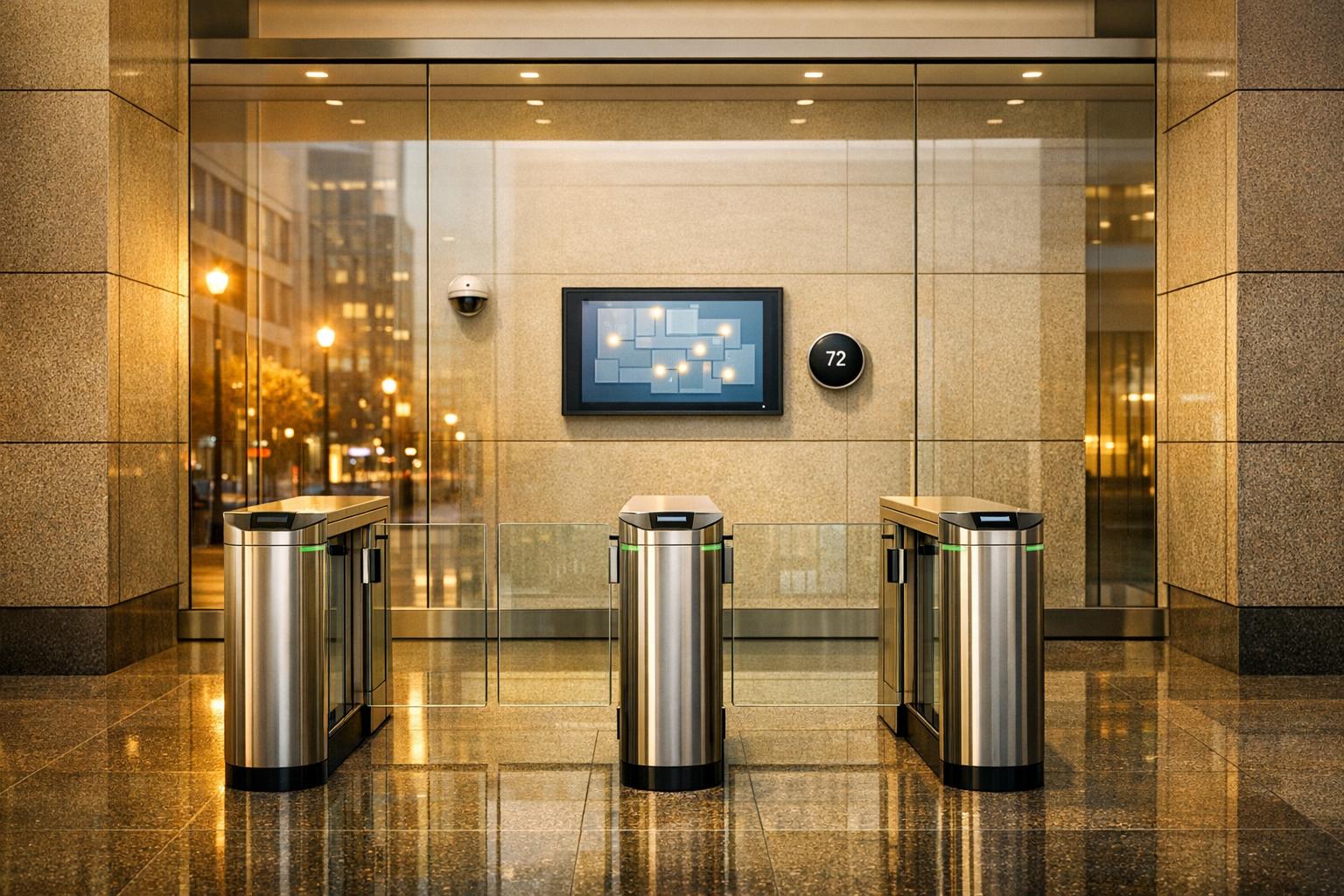
7 Cybersecurity Risks for CRE Technology
The commercial real estate (CRE) industry is increasingly reliant on digital systems to manage everything from HVAC to security cameras. While these technologies streamline operations, they also open the door to cyber threats that can disrupt property management, compromise tenant data, and damage reputations. Here’s a quick rundown of the seven major cybersecurity risks facing CRE today:
- Ransomware Attacks: Target property management systems, freezing operations and demanding payments.
- Cloud Data Breaches: Misconfigured settings and human error expose sensitive tenant and operational data.
- IoT Vulnerabilities: Smart devices like thermostats and cameras create entry points for hackers.
- Wire Fraud and Email Hijacking: Phishing and email scams lead to financial losses and data theft.
- Weak Access Controls: Outdated permissions and poor authentication practices leave systems exposed.
- Vendor and Third-Party Risks: Contractors with lax security protocols can compromise entire networks.
- AI-Driven Attacks: Hackers use AI to execute faster, more personalized attacks, including deepfake phishing.
To combat these risks, CRE professionals must prioritize strong cybersecurity measures, including multi-factor authentication, network segmentation, regular audits, and employee training. Cybersecurity is no longer just an IT issue - it’s a core part of managing and protecting real estate assets.
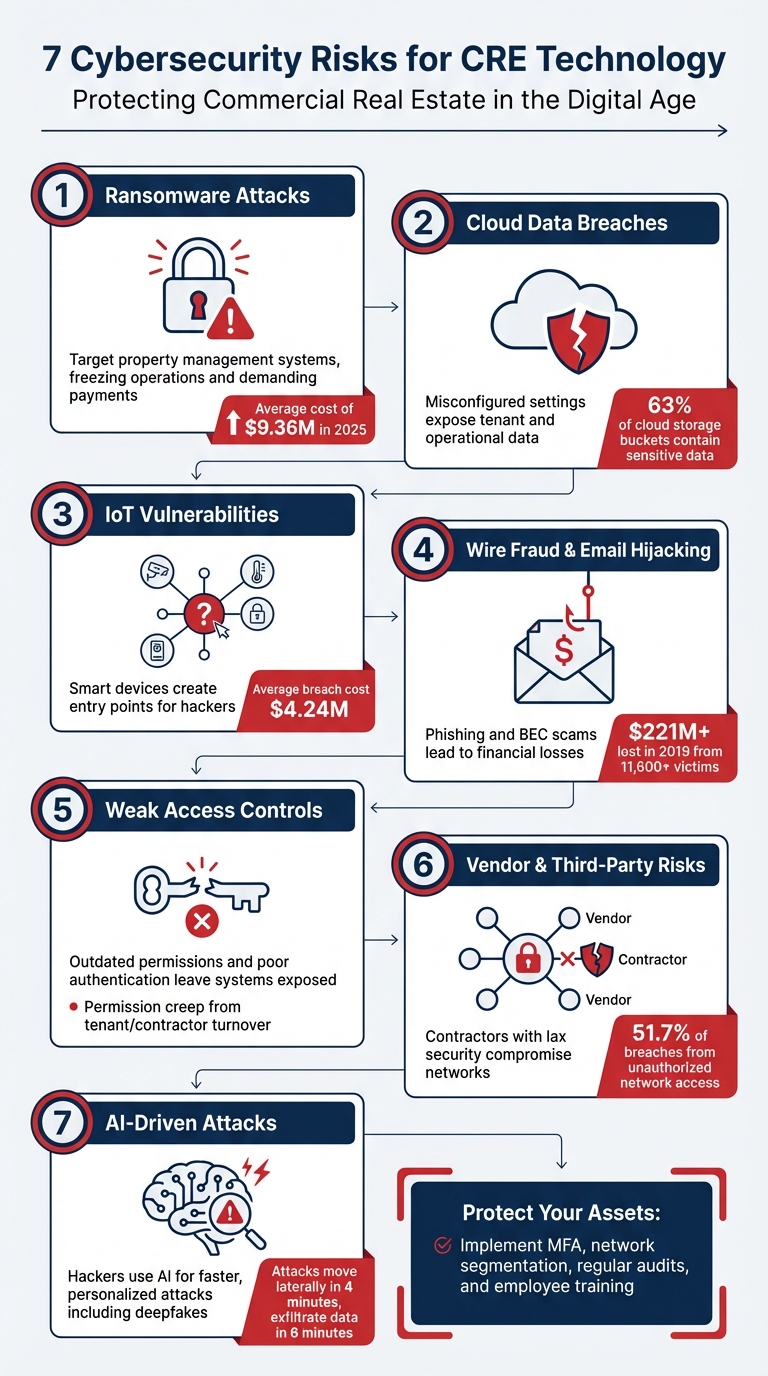
7 Major Cybersecurity Risks Facing Commercial Real Estate Technology
1. Ransomware Attacks on Property Management Systems
Operational Impact on CRE Technology and Systems
When ransomware infiltrates a property management system, the entire operation can come to a screeching halt. Tasks like collecting rent, scheduling maintenance, and screening tenants are instantly frozen. The financial consequences are massive - cybersecurity breaches are projected to cost property managers an average of $9.36 million in 2025. But the damage doesn't stop there. Attackers can also take control of Building Management Systems (BMS), which oversee critical functions like HVAC, lighting, elevators, and even security cameras.
"If ransomware strikes, your operations can grind to a halt, causing service failures, reputational damage, and potential legal exposure." - Occupancy Solutions
The ripple effects of a single attack can shake stakeholder confidence, disrupt financing agreements, and tarnish market perception. These disruptions highlight how system integration, while convenient, can also create vulnerabilities that attackers are quick to exploit.
Specific Vulnerabilities or Attack Vectors
The centralized nature of modern property management systems makes them particularly vulnerable. These systems often control everything from climate settings to building access and security. While this integration improves efficiency, it also means a single breach can jeopardize an entire building's infrastructure. Devices like smart thermostats, security cameras, and door locks can all act as entry points for attackers.
The risks escalate when building management systems share networks with tenant data systems. An attacker could exploit a compromised HVAC controller to access sensitive financial data. Ransomware often enters through phishing emails that mimic vendor invoices or urgent maintenance alerts, tricking users into granting access. Once inside, attackers encrypt vital data and demand payment to restore it.
Practical Mitigation Strategies
To counter these risks, property managers must adopt strong cybersecurity practices, such as:
- Isolating IoT devices on a separate VLAN to limit exposure.
- Maintaining offline backups of essential systems to ensure data recovery.
- Enforcing multi-factor authentication for administrative accounts to prevent unauthorized access.
- Regularly updating firmware and software to patch vulnerabilities.
- Creating and testing a comprehensive incident response plan for quick action during breaches.
- Adhering to CISA Smart Building Security Guidance and thoroughly vetting third-party vendors' security measures.
Trio CRE continues to strengthen its cybersecurity measures to protect both its operations and tenant information from evolving threats.
2. Data Breaches in Cloud Storage
Operational Impact on CRE Technology and Systems
Cloud breaches can do more than just compromise data - they can grind vital systems to a halt. When attackers infiltrate cloud-based platforms, they can interfere with essential building operations like HVAC systems, lighting, and elevators. The financial cost is steep: on average, security teams spend 145 hours (around six days) resolving a single security alert. During this time, normal operations may remain disrupted.
Modern building systems often house sensitive data, such as tenant and visitor activity from digital entry systems and surveillance footage. If this data is exposed, it not only violates privacy but could also lead to breaches of data protection laws. Shared networks between tenant systems and building management increase the risk, as a single attack could compromise both.
"Cybersecurity is now a core component of CRE risk management, similar to environmental reviews or structural due diligence." - Keyser Editorial Team
Poor cloud security can also hurt property valuation and financing, as investors and lenders now scrutinize cybersecurity protocols closely. These risks highlight the importance of identifying and addressing vulnerabilities in cloud systems.
Specific Vulnerabilities or Attack Vectors
Human error is a major factor in cloud vulnerabilities. A staggering 63% of publicly exposed cloud storage buckets contain sensitive data, often due to misconfigured default settings. Multi-factor authentication (MFA) is another weak spot - 76% of organizations don’t require MFA for console users, and 58% neglect it for root or administrative accounts.
Technical flaws amplify these issues. For instance, 63% of production codebases include unpatched high or critical vulnerabilities, leaving systems open to exploitation. The growing reliance on open-source software also presents risks, as neglected or malicious code can create backdoors into cloud-stored data. These gaps make it clear that stronger security measures are essential.
Practical Mitigation Strategies
To protect against breaches, property managers should implement multi-factor authentication for all accounts, prioritizing administrative access. Automated backups should be stored in secure, isolated locations across multiple regions to ensure data recovery is possible after an attack.
Regularly patching high-risk vulnerabilities is another critical step. Carefully review open-source dependencies to identify potential security risks. Additionally, create thorough business continuity and disaster recovery plans that focus on cloud-based data recovery. Interestingly, 80% of security alerts in cloud environments stem from just 5% of security rules. By concentrating resources on these high-priority areas, organizations can maximize their defenses.
For CRE professionals and Trio CRE, these proactive steps are essential to maintaining operations and protecting tenant data in today’s digital world.
3. IoT and Smart Building System Vulnerabilities
Operational Impact on CRE Technology and Systems
Smart building technologies bring convenience but also create serious risks when security is breached. If attackers gain unauthorized access to Building Management Systems (BMS), they can disrupt critical operations remotely. This could grind building functions to a halt, causing significant operational and financial damage. In fact, the average cost of a data breach in 2021 was a staggering $4.24 million. Beyond operational disruptions, breaches can also jeopardize physical security. Hackers could exploit entry data or surveillance footage to monitor tenant movements or gain access to restricted areas.
"Digital security is becoming inseparable from physical security." - Keyser Editorial Team
These risks highlight how deeply intertwined digital systems have become with the physical infrastructure of commercial properties. Let’s dive deeper into the specific vulnerabilities that make these systems a target.
Specific Vulnerabilities or Attack Vectors
Every connected device in a smart building - whether it’s an air quality monitor or a smart speaker - can act as a potential entry point for cyberattacks. A striking example is the 2013 Target breach, where attackers accessed 40 million credit and debit card numbers by exploiting an HVAC contractor’s credentials. This incident underscores how weak security in one system can be leveraged to infiltrate more sensitive networks.
Shared networks further escalate the risk. A breach in one system can quickly spread to others, compromising the entire network. Additionally, devices like facial recognition cameras and voice assistants often collect sensitive personal data, raising concerns about privacy and compliance with regulations.
"Hackers only need one point of entry." - Pillsbury's Construction & Real Estate Law Team
Practical Mitigation Strategies
To protect these systems, start by isolating networks. Place IoT devices handling sensitive data on separate, secured networks to block attackers from moving laterally within the system. Use multifactor authentication (MFA) across all building systems and restrict access to critical functions.
Before adopting new smart technologies, thoroughly assess suppliers' security practices. Include audit rights in vendor contracts to ensure their systems can be reviewed both before installation and after any incidents. Limit data collection to only what’s essential for operations, reducing the potential risk if a breach occurs. Finally, provide regular security training to staff to keep them informed about the latest threats and protocols.
Next, we’ll look into the risks of wire fraud and email hijacking in CRE technology.
4. Wire Fraud and Email Hijacking
Operational Impact on CRE Technology and Systems
In 2019, real estate fraud resulted in losses exceeding $221 million from over 11,600 victims. Within the commercial real estate (CRE) sector, email scams alone have accounted for nearly $1 billion in stolen funds. Hijacked email accounts are a goldmine for criminals, exposing sensitive information such as rental applications, credit reports, and lease agreements - all of which often include Social Security numbers and banking details. These stolen details are frequently sold on the dark web. But the damage doesn’t stop there. Once an account is compromised, attackers can infiltrate broader networks, threatening building management systems and tenant operations. Such breaches can severely disrupt the seamless functioning of CRE technology.
Specific Vulnerabilities or Attack Vectors
A major tactic used by cybercriminals is Business Email Compromise (BEC). In these schemes, attackers either spoof or gain unauthorized access to email accounts belonging to real estate professionals, including agents, brokers, and title companies. Often, they patiently monitor email exchanges for weeks, waiting for the perfect moment - usually right before a property closing when wiring instructions are shared.
"The BEC scam targets all participants in real estate transactions." - FBI
Another common method involves unauthorized account access. Criminals use phishing schemes or keylogging software to steal login credentials, enabling them to defraud buyers, sellers, and financial institutions. The fast-paced and mobile nature of CRE transactions only heightens these risks, as agents frequently rely on mobile devices, where human error is more likely.
"Intercepting just one individual transaction can represent a huge pay day - and issues can blossom if they are able to successfully access an entire network's data center for client and partner emails." - Dan Maier, Vice President at Cyren
Practical Mitigation Strategies
To reduce the risk of wire fraud, always verify wiring instructions through a trusted phone number or in person - never rely solely on email. Multi-factor authentication (MFA) is a critical safeguard for company email accounts and financial platforms, helping to prevent account takeovers. An email security gateway can also serve as a frontline defense, blocking spoofed messages and malicious links before they reach employees.
Sensitive details like Social Security numbers and bank account information should never be sent through standard email. Instead, use encrypted communication channels to ensure data security. Employees should avoid accessing wire transfer portals or financial accounts over public Wi-Fi networks, and companies should implement network segmentation. This ensures that a single compromised email account doesn’t grant attackers access to more critical systems.
Next, we’ll explore additional vulnerabilities that pose risks to CRE technology.
5. Weak Access Control and Authentication Practices
Operational Impact on CRE Technology and Systems
"Access control is one of the most persistent challenges in commercial real estate." - Acre Security
Weak access controls pose risks far greater than just leaving a door unlocked. If attackers gain unauthorized access to Building Management Systems (BMS), they can disrupt critical operations like HVAC, lighting, elevators, and energy management across an entire property. The constant turnover of tenants, contractors, and employees in commercial buildings adds another layer of risk. Outdated permissions often linger, creating "permission creep" that opens the door - literally and figuratively - to unauthorized access.
From a financial perspective, the stakes are high. Poor access controls can lead to theft, vandalism, and liability issues, all of which can hurt property valuation and erode investor trust. With modern systems being networked, a digital breach - such as unauthorized access to a management dashboard - can jeopardize both physical security and tenant safety.
Specific Vulnerabilities or Attack Vectors
Several vulnerabilities stand out. Physical cards and fobs, for instance, can be easily cloned or shared, making them a weak link in access control. Tailgating, where unauthorized individuals follow someone into a secured area, remains a common issue in busy building lobbies. Cloud-hosted dashboards also present risks, as remote attackers may target these systems to gain control over building locks or other security mechanisms.
"Threats like credential cloning or unauthorized access to management dashboards can compromise both safety and sensitive data." - Acre Security
Another major issue is "ghost access", where credentials are not revoked promptly when tenants move out or employees change roles. These dormant permissions can remain active for weeks or even months, creating exploitable gaps in security. During system outages, property teams often resort to manual processes, which can introduce additional vulnerabilities.
Practical Mitigation Strategies
To address these challenges, implementing least-privilege rules is crucial. This approach ensures users can access only the areas and systems necessary for their roles. Clear protocols should also be in place to immediately revoke credentials when tenants or employees leave, eliminating the risk of ghost access. Regularly auditing access logs and system permissions can help identify outdated profiles and potential security issues.
Modern mobile credentials, such as those using Bluetooth or NFC technology, offer a more secure alternative to physical cards. These digital credentials can be issued or revoked instantly, eliminating the need for rekeying and reducing the risk of cloning since they are encrypted. Additionally, integrating access controls with video surveillance and alarms can help detect and respond to tailgating incidents. Protecting management dashboards with strong authentication measures is another essential step to prevent unauthorized tampering.
6. Vendor and Third-Party Access Risks
Operational Impact on CRE Technology and Systems
External vendors play a vital role in commercial real estate (CRE) operations, but their involvement can introduce serious cybersecurity risks. Their remote access to building systems often creates entry points for attackers. A notable example involved an HVAC contractor with weak security protocols, which allowed hackers to infiltrate a network, leading to millions in damages.
"The unauthorized access of a building system can cause financial harm, disrupt a tenant's business and result in the destruction of property." – Eric B. Levine, Lindabury, McCormick, Estabrook & Cooper
Certain properties, like those with sensitive climate control needs - such as cloud server warehouses or pharmaceutical storage facilities - face heightened risks. If these systems are compromised, the financial losses can escalate rapidly, with millions of dollars in inventory at stake within hours. Financial services organizations tied to CRE, including REITs and real estate investment funds, are also prime targets for cyberattacks, being 300 times more likely to be attacked than other industries.
Specific Vulnerabilities or Attack Vectors
In 2024, third-party vendors were linked to breaches affecting 227 publicly disclosed companies. Among these incidents, 51.7% stemmed from unauthorized network access, while ransomware accounted for 29.9%. The healthcare sector, which is often part of mixed-use properties, saw an alarming 74% of its cybersecurity incidents in 2023 tied to third-party vendors. One breach that year involving a pharmacy system provider exposed the data of 100 million individuals.
Interconnected systems, where platforms like CRM, property management, and financial tools share data, amplify the risks. A breach in one system can easily cascade, jeopardizing the entire network. Alarmingly, only 10 out of 92 vendors assessed in 2024 improved their cybersecurity ratings by more than 3 points, reflecting a widespread inability - or unwillingness - to address security weaknesses quickly. These issues highlight the pressing need for tighter vendor oversight.
Practical Mitigation Strategies
To address these risks, start with a comprehensive technology audit. Map out all access points to critical systems like HVAC, electrical, and security networks. When engaging vendors, insist on detailed security protocols and review their incident response history before signing any contracts.
"Demanding vendor information and reviewing vendor contracts before work commences is essential." – Eric B. Levine, Lindabury, McCormick, Estabrook & Cooper
Update lease agreements to clearly define cybersecurity responsibilities. This should include clauses requiring vendors to indemnify against cyber losses and maintain adequate cyber insurance. For firms working with EU financial institutions, compliance with the Digital Operational Resilience Act (DORA) is now mandatory. This regulation demands regular resilience testing and imposes stricter requirements on third-party IT vendors. Additionally, pinpoint single points of failure in critical building systems and establish backup plans to ensure continued operations during vendor-related outages.
Trio CRE strengthens its cybersecurity posture by closely managing vendor access and routinely auditing system vulnerabilities, safeguarding its commercial real estate assets from potential threats.
7. AI-Driven and Automated Attacks
Operational Impact on CRE Technology and Systems
Artificial intelligence is changing the game in commercial real estate (CRE) cybersecurity. With 92% of corporate real estate teams either piloting AI or planning to do so within the year, the pace of adoption is staggering. But this rapid shift also brings significant risks. Attackers are leveraging AI to launch highly sophisticated attacks at speeds traditional security measures can't keep up with. In some instances, companies have suffered losses of over $25 million in less than 30 minutes.
"Attackers now have access to incredible tools that allow them to search your public data, your personal information, and do very personalized deep phishing tactics." – Naveen Balakrishnan, Managing Director, TD Securities
The rise in attack speed is alarming. Hackers can now move laterally within systems in just 4 minutes and exfiltrate data in 6 minutes - a staggering 85% improvement compared to 2024. For CRE firms managing sensitive tenant information, financial data, and building management systems, this leaves almost no time for manual intervention. The need for defenses that match the attackers' speed has never been more urgent.
Specific Vulnerabilities or Attack Vectors
AI has made cybercrime more accessible than ever. Hackers can generate malware at scale and automate its delivery with minimal effort. Adding to the problem, nearly 50% of code snippets from large language models contain critical bugs that hackers can exploit, creating potential vulnerabilities in property management and building automation systems.
Deepfake phishing is a particularly dangerous tactic. AI tools can scrape public and personal data to craft hyper-personalized phishing campaigns. These include convincing voice and video deepfakes designed to trick property managers into approving fraudulent wire transfers or granting unauthorized access to building systems. Another emerging threat is model poisoning, where attackers inject malicious data into AI models, manipulating them to overlook vulnerabilities or spread misinformation.
Then there’s the issue of shadow AI - the use of AI tools by employees without proper authorization. This practice creates compliance gaps and broadens the attack surface. With only 33% of the workforce feeling prepared to use AI technologies responsibly, employees often unknowingly expose sensitive tenant or financial data through unsecured generative AI platforms.
Practical Mitigation Strategies
To counter machine-speed attacks, defenses need to operate at the same pace. AI and automation can contain threats in as little as 4 minutes, while manual responses take an average of 16 hours. Implementing AI-powered tools like Network Detection and Response (NDR) and Security Information and Event Management (SIEM) systems can help monitor internal traffic for suspicious activity that traditional firewalls might miss. These tools not only enhance security but also lead to cost savings, averaging $1.9 million.
Behavioral analytics can also play a critical role. By profiling "normal" patterns for systems like HVAC, lighting, and access controls, AI can detect anomalies such as off-hours access or unusual data spikes. This proactive approach helps close vulnerabilities before attackers can exploit them.
"You can never outsource your accountability. So if you decide to place reliance on these AI models... and something goes terribly wrong, the accountability is still going to fall on the organization." – David Cass, CISO, GSR
Human oversight remains essential. Regularly review AI outputs to prevent manipulation. Adopt frameworks like the NIST AI Risk Management Framework or ISO/IEC 42001 to manage AI-related risks. Conduct thorough audits of vendors to assess their AI governance policies, monitor for issues like "model drift", and establish clear security service-level agreements (SLAs). Additionally, train employees to recognize AI-driven threats, including deepfake audio and video, to better identify and respond to sophisticated social engineering attempts. These steps, combined with earlier strategies for securing CRE technology, create a stronger, more resilient cybersecurity approach.
Beyond locks and cameras: Cyber risk in CRE with Lachlan MacQuarrie at Intelligent Buildings LLC

Conclusion
The commercial real estate (CRE) sector faces mounting cybersecurity challenges, ranging from ransomware targeting property management systems to phishing campaigns aimed at sensitive data. Incidents like the 2013 Target breach highlight the severity of such risks. Today, any connected system - whether it's lighting controls or tenant networks - can become a doorway for cyberattacks.
"Cybersecurity is now a core component of CRE risk management, similar to environmental reviews or structural due diligence."
– Keyser Editorial Team
To combat these ongoing threats, adopting secure practices is non-negotiable. This includes regular security audits, timely software updates, structured remote access protocols, and well-prepared incident response plans.
Training employees to recognize phishing and spoofing attempts is equally critical. Cybersecurity now extends beyond IT teams, encompassing physical security as well. Everyone - from property managers to maintenance staff and executives - has a role in protecting these systems.
Vendor selection also demands careful attention. It's important to evaluate their security measures, ensure contractual compliance, and use lease negotiations to clarify technology responsibilities. These discussions can also address cyber liability, limit potential losses, and outline insurance needs. With digital security increasingly influencing property values and lender decisions, maintaining strict oversight of vendors is a necessity.
FAQs
What should I do first if my building systems get hit with ransomware?
If ransomware strikes your building systems, the first step is to immediately disconnect the impacted systems from the network. This action prevents the ransomware from spreading to other devices. Next, alert your cybersecurity or incident response team so they can evaluate the situation and initiate your incident response plan. Taking these measures helps limit the damage and safeguard other connected systems while setting the stage for recovery efforts.
How can I secure IoT devices like HVAC, cameras, and smart locks without replacing them?
To keep IoT devices like HVAC systems, cameras, and smart locks secure without needing to replace them, prioritize network security and firmware updates. Start by isolating these devices on separate networks or VLANs to keep them away from your critical systems. Make sure their firmware and software are always up to date, and use strong, unique passwords for each device. Wherever possible, enable multi-factor authentication for an added layer of protection. Finally, keep an eye on your network activity to spot and address any potential threats early.
What cybersecurity requirements should I include in vendor contracts and leases?
Vendor contracts and leases need to clearly outline cybersecurity requirements. These should include elements like vendor risk assessments, data encryption standards, access controls (such as multi-factor authentication), incident response responsibilities, and compliance with applicable regulations. By including these provisions, businesses can reduce risks associated with issues like IoT vulnerabilities and data breaches.